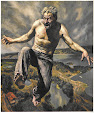
i've heard it said: these are not the acts of good people
is it
something we can capture this essence of existence
it is a question
without an answer
remember that stoic kant as he wrote about imperatives
analytic and synthetic
a priori 드드드드 dadadada
manifestations of mental trips
so who's concerned about falling down
stairs and ladders and firemen and bopping
wars in the streets plundered a port a post
eriori far aday -electric the big b & brass
off such dark little-blue_lines
a year ago - who remembers
memories of mimiiics - oh -
mimicry - hush - 0b0 ; it' si ' oh - him/of course
dead - the country
biomimicry everything dead
blues removed distance outside
present, but we all must know - no - now - it good
of the damned usele s s points
important one of the most
important d's the big D's that 's
so wasted in the european world of education
we {'ve} all heard it @lynchinredgood
stand up b ow out was woke
methods of mannerisms
that IS the sense of hearing we know of from our illustrious
natural wizards
leading the operational
charge camouflage
pattern design industrious victorious
merit merit merit! what great word chants ^ tariff*3! isysysay with exclamatory magnificence
magnanimous malevolence reveng(e)nce
everybody rejoice
signature ~ the very best ~ and that other is so bad
lousy ledgerers
big problem death up there in ladderterritory
SHOO u̷n̷h̷i̷n̷g̷e̷d̷ ̷t̷h̷r̷e̷a̷t̷s̷ fears upris{ign} ting
war at wards municipality
faroffborders impervious laughnolaugh silence @ incompetent
big blue cities
fire men!women! where are the heroes of my childhood
indecent at lasting = fasting Ю путин
nor strange remorse
loyalty fealty senility
some say, at least that,
's what i heard
say
Showing posts with label Politics. Show all posts
Showing posts with label Politics. Show all posts
30 September 2025
i've heard it said: these are not the acts of good people


13 February 2013
Drivel or Republican Vision?
Republicans have been accused of being out of touch with reality, of creating an alternate reality, and of being unaware of real Americans' hardships, and many other epithets, rest assuredly. While the same can be said about most Americans' awareness of the rest of the world, Americans who on Valentine's day will buy diamonds that were torn from the earth by forced labor (by those whose limbs have been left in tact) and harvested through blood conflicts, Americans who sport clothes with tags that read "Made in Taiwan" or "Made in Vietnam" and are about the most international characteristic of 99% of the population of the entire Midwest, Americans who purchase the latest Apple product with little to no regard for the cheap labor that assembled the machines (or the tricky profit schemes Apple uses to maximize profit), Marco Rubio's response to the State of the Union address did little to dispel the notion that Republicans are quite clueless.
The blindfold that covers their eyes and allows them to bellow at us with bravado and bluster to of course naturally accept their call for freer markets, lower corporate tax rates, and more growth through larger tax cuts may be rosy-colored but their coffers really see black. That's the sound of high-financed lobbyists ringing the token bell.
Whether we believe that lower corporate tax rates would mean more money circulated within our shores is second fiddle to the fact that while most Americans have seen little to no growth in their wages, corporations have been raking in record profits. No matter how the message gets parsed, no matter how many iterations it flows through the resulting whole of a re-explained trickle down economy is still just what it sounds like, voodoo economics. And no matter what it's called, whether it's referred to euphemistically or boldly cited, or how it's explained, it's still just a mess beyond salvaging because it's a route that doesn't flow through or in this case flow down. As has become intolerably obvious to most of us, over the last 50 years (it has been that long, just think about Hubert Humphrey's message) the wealth has accumulated at the top and has stayed there.
Any reasonable observer ought to question the central theme of Mr. Rubio's ideological backwash that a freer market would solve the nation's economic questions and put the country on the track of real growth, without regard to the 2-3% growth we've seen over the past few years.
Despite the partisan ballyhoo and sales pitch, a truly free market does not exist, never has, and never will. Mr. Rubio and his fellow Republicans would never allow the federal government to drop patent laws or intellectual property in favor of open source information or a free flow of ideas. Instead the government regulates which companies can produce merchandise and who owns those ideas. Corporations hire patent lawyers en masse to file endless streams of patent claims on things that do not exist and very likely never will if they have their way. In a free market, there'd be no limitations or sanctimonious attention paid to the protection of ideas that are locked away in aging files by aging filers in aging file cabinets in dusting aged offices. There would have been no lawsuit between Apple and Samsung over the design and functionality of the Galaxy.
Likewise, in a free market, a company would save money by hiring cheap expendable labor preferably those that heal quickly or are too young to unionize and complain too much. The perfect employees are those that cannot defend themselves, are nearly illiterate (hence the burgeoning child prostitution rings around the world), and are desperate for work. A truly free market would indeed be rid of the hurdle of child labor laws or minimum wage mandates.
In a free market a company capitalizes on spending the least amount of money while selling the most merchandize. Safety within a factory or place of business in a free market takes a back seat. Witness the Apple plants in China. And heaven forbid were a majority of Americans to visit the sweatshops of Vietnam in places like Hue where the average work day is about 14 hours and the average pay is about 5 USD a week to see where those labels are actually sewn onto the shirts on our backs because then what would obese Americans wear to cover the negligent signs of overexcess?
But then Republicans would have to do away with OSHA, which many probably do want to have away with. There could be no safety in work-force laws mandated by the government. The safety of workers would be left to the devices of an amoral free market economy in which, many free market supporters argue, the markets would take care of themselves. Consumers, that is people who buy the crap that capitalists invest their money in, would buy the products that are created with integrity. Clearly this is exactly what has happened with De Beers, Nike, Apple, etc. Instead just the opposite phenomenon has occurred. Cheaply manufactured and cheaply built products out sell more expensive longer lasting products. That's the business model of Walmart. Buy cheap, sell cheap, earn more due to lower wages and planned obsolescence of manufactured goods, which ensures a returning share of buyers. There are plenty of government regulations protecting Walmart's interest, let's be very clear about that.
The Republican ideal argument of a free market is as far from reality as what most Americans are watching on their glowing blue-light electronic boxes right now, more than likely since it's a cheaply made programming alternative, known as "reality TV". A free market would mean that while one car plant is assembling cars with safety belts, another manufacturer could pop up with the same design but sell a cheaper car without safety belts. For reasons that are obvious to anyone who does not believe TV represents reality, corporations would never allow for a truly free market, likewise nor should we to be sure. At present most of the corporate, patent, and intellectual property laws protect the massive corporations like GE from smaller ma and pa shops from snatching their ideas and underselling the big guys.
It's a pipe dream that Republicans are selling and they sell it hard because it sounds like they have something to offer, when really it's the same old schmooze and and the same old song just with a very slightly different dance. In the end it's offering nothing new; it's status quo politics. Mr. Rubio explained that he'd like to see more money being circulated, more growth through entrepreneurship. But it's pretty difficult to attain that when most of the money that is supposedly circulating is essentially coagulating at the top in a way eerily reminiscent of the massive floating garbage patch in the Pacific.
To take just a brief sampling of a few occupations in America and their average earnings, look to the government for some interesting statistics. According to the US Bureau of Labor Statistics waiters and waitresses earn a median pay of $18,330 per year or $8.81 per hour. CEOs and top executives meanwhile earn a median pay of $101,250 per year or $48.68 per hour. Physicians and surgeons earn $166,400 per year or $80.00 per hour. Of particular interest in our increasingly service-oriented economy, cashiers earn $18,500 per year or about $8.89 per hour. Quite a few politicians are aghast when workers beg for a higher federally mandated minimum wage.
The question that the information must beg from the incredulous fact checker has to be about who the Republicans are claiming will circulate the money. Top wage earners have no interest in spreading their wealth amongst the lowest wage earners, that's been made abundantly clear, except in instances when tips are rewarded for servitude provided without overdone sycophancy perhaps; even in those rare circumstances generosity is easier to obtain from the typical RUF soldier than your run-of-the-mill Bob Parsons.
Naturally we should all look upon the views expressed by Mr. Rubio and Mr. Obama with dubious certainty. Mr. Obama's credibility has been severely damaged by the drastic overreach of his administration through its ever-expanding use of executive power and privilege. But for posterity's sake at least his vision includes, even if only in rhetoric, a glimpse of the real plight in America - that of the impoverished and the defenseless. But overall the messages are lacking of any authentic or compelling sense of urgency or call to action. Yet, if America can't get some realism out of its elected leaders where will it come from? There definitely ought to be no lack of clarity in our urgency to lump the Republican vision in with the so called reality of American Housewives Dancing Idol, or whatever new fad counts for "television" today, as dreadfully imperceptive. I think I'll stick with Downton Abbey for a veritable illusion of reality.
The blindfold that covers their eyes and allows them to bellow at us with bravado and bluster to of course naturally accept their call for freer markets, lower corporate tax rates, and more growth through larger tax cuts may be rosy-colored but their coffers really see black. That's the sound of high-financed lobbyists ringing the token bell.
Whether we believe that lower corporate tax rates would mean more money circulated within our shores is second fiddle to the fact that while most Americans have seen little to no growth in their wages, corporations have been raking in record profits. No matter how the message gets parsed, no matter how many iterations it flows through the resulting whole of a re-explained trickle down economy is still just what it sounds like, voodoo economics. And no matter what it's called, whether it's referred to euphemistically or boldly cited, or how it's explained, it's still just a mess beyond salvaging because it's a route that doesn't flow through or in this case flow down. As has become intolerably obvious to most of us, over the last 50 years (it has been that long, just think about Hubert Humphrey's message) the wealth has accumulated at the top and has stayed there.
Any reasonable observer ought to question the central theme of Mr. Rubio's ideological backwash that a freer market would solve the nation's economic questions and put the country on the track of real growth, without regard to the 2-3% growth we've seen over the past few years.
Despite the partisan ballyhoo and sales pitch, a truly free market does not exist, never has, and never will. Mr. Rubio and his fellow Republicans would never allow the federal government to drop patent laws or intellectual property in favor of open source information or a free flow of ideas. Instead the government regulates which companies can produce merchandise and who owns those ideas. Corporations hire patent lawyers en masse to file endless streams of patent claims on things that do not exist and very likely never will if they have their way. In a free market, there'd be no limitations or sanctimonious attention paid to the protection of ideas that are locked away in aging files by aging filers in aging file cabinets in dusting aged offices. There would have been no lawsuit between Apple and Samsung over the design and functionality of the Galaxy.
Likewise, in a free market, a company would save money by hiring cheap expendable labor preferably those that heal quickly or are too young to unionize and complain too much. The perfect employees are those that cannot defend themselves, are nearly illiterate (hence the burgeoning child prostitution rings around the world), and are desperate for work. A truly free market would indeed be rid of the hurdle of child labor laws or minimum wage mandates.
In a free market a company capitalizes on spending the least amount of money while selling the most merchandize. Safety within a factory or place of business in a free market takes a back seat. Witness the Apple plants in China. And heaven forbid were a majority of Americans to visit the sweatshops of Vietnam in places like Hue where the average work day is about 14 hours and the average pay is about 5 USD a week to see where those labels are actually sewn onto the shirts on our backs because then what would obese Americans wear to cover the negligent signs of overexcess?
But then Republicans would have to do away with OSHA, which many probably do want to have away with. There could be no safety in work-force laws mandated by the government. The safety of workers would be left to the devices of an amoral free market economy in which, many free market supporters argue, the markets would take care of themselves. Consumers, that is people who buy the crap that capitalists invest their money in, would buy the products that are created with integrity. Clearly this is exactly what has happened with De Beers, Nike, Apple, etc. Instead just the opposite phenomenon has occurred. Cheaply manufactured and cheaply built products out sell more expensive longer lasting products. That's the business model of Walmart. Buy cheap, sell cheap, earn more due to lower wages and planned obsolescence of manufactured goods, which ensures a returning share of buyers. There are plenty of government regulations protecting Walmart's interest, let's be very clear about that.
The Republican ideal argument of a free market is as far from reality as what most Americans are watching on their glowing blue-light electronic boxes right now, more than likely since it's a cheaply made programming alternative, known as "reality TV". A free market would mean that while one car plant is assembling cars with safety belts, another manufacturer could pop up with the same design but sell a cheaper car without safety belts. For reasons that are obvious to anyone who does not believe TV represents reality, corporations would never allow for a truly free market, likewise nor should we to be sure. At present most of the corporate, patent, and intellectual property laws protect the massive corporations like GE from smaller ma and pa shops from snatching their ideas and underselling the big guys.
It's a pipe dream that Republicans are selling and they sell it hard because it sounds like they have something to offer, when really it's the same old schmooze and and the same old song just with a very slightly different dance. In the end it's offering nothing new; it's status quo politics. Mr. Rubio explained that he'd like to see more money being circulated, more growth through entrepreneurship. But it's pretty difficult to attain that when most of the money that is supposedly circulating is essentially coagulating at the top in a way eerily reminiscent of the massive floating garbage patch in the Pacific.
To take just a brief sampling of a few occupations in America and their average earnings, look to the government for some interesting statistics. According to the US Bureau of Labor Statistics waiters and waitresses earn a median pay of $18,330 per year or $8.81 per hour. CEOs and top executives meanwhile earn a median pay of $101,250 per year or $48.68 per hour. Physicians and surgeons earn $166,400 per year or $80.00 per hour. Of particular interest in our increasingly service-oriented economy, cashiers earn $18,500 per year or about $8.89 per hour. Quite a few politicians are aghast when workers beg for a higher federally mandated minimum wage.
The question that the information must beg from the incredulous fact checker has to be about who the Republicans are claiming will circulate the money. Top wage earners have no interest in spreading their wealth amongst the lowest wage earners, that's been made abundantly clear, except in instances when tips are rewarded for servitude provided without overdone sycophancy perhaps; even in those rare circumstances generosity is easier to obtain from the typical RUF soldier than your run-of-the-mill Bob Parsons.
Naturally we should all look upon the views expressed by Mr. Rubio and Mr. Obama with dubious certainty. Mr. Obama's credibility has been severely damaged by the drastic overreach of his administration through its ever-expanding use of executive power and privilege. But for posterity's sake at least his vision includes, even if only in rhetoric, a glimpse of the real plight in America - that of the impoverished and the defenseless. But overall the messages are lacking of any authentic or compelling sense of urgency or call to action. Yet, if America can't get some realism out of its elected leaders where will it come from? There definitely ought to be no lack of clarity in our urgency to lump the Republican vision in with the so called reality of American Housewives Dancing Idol, or whatever new fad counts for "television" today, as dreadfully imperceptive. I think I'll stick with Downton Abbey for a veritable illusion of reality.
23 October 2012
Debate / Comprehensive List of Presidential Candidates / 10 Things Mitt Romney and Paul Ryan Don't Want Americans to Know | Alternet
I don't know if many Americans sit around after the debates wondering what a real debate would look like, but one observation has to be that the final presidential debate was anything but a debate. If earlier analysis showed some differences in world view between Mr. Romney and Pres. Obama in addition to some angst between the two, the final debate on foreign policy showed that the two world views aren't really that different.
While Mr. Obama boils down Mr. Romney's domestic plans to cutting taxes, the only proposal Mr. Obama counters with is raising them on the wealthy, which should be done, but it's high on rhetoric and populism and lacking in actual policy. In the foreign policy "debate", there was far more hand shaking and back patting then there was actual discussion. It would have been somewhat pleasing to have got something substantial to sink one's teeth into. But the candidates played safe.
Their attempts to discuss the Iranian and Syrian situation either was on the cuff - in lieu of revealing state secrets, perhaps - or incredibly sophomoric and elementary. While it seems that the president and presidential candidate should have been able to offer a better grasp on facts, there may be some legitimate reasons why both were closely guarded in their approach toward describing their foreign policies. The only one that comes to mind is that neither wanted to screw up.
Well short of revealing any state secrets - one could argue short of revealing well known secrets, the foreign policy "debate" quickly evolved into what can more aptly be described as a foreign policy "survey". At one point, again with careful regard to state secrets we can imagine, Mr. Romney attempted to describe the basic structure of the Israeli government; while highly enlightening (thank you very much) and well rehearsed, this type of basic instruction barely nudges top secret discussion. And we all know that Mitt Romney's got barred gates over top secret info as we saw on his trip to the UK.
So what was actually revealed by this the third and final presidential debate? Not much.
Neither candidate was willing to honestly discuss our role in Iranian foreign policy, nor the fact that the US has stationed military forces in the Middle East that completely envelope Iran, including aircraft carriers in the Persian Gulf, the southern border of Iran, hence the sea, Mr. Romney. It's a classic bait and switch and US bullying at its worst. But Mr. Romney is too intent on ignoring American mistakes - his "no apology approach" - and Mr. Obama is too intent on campaigning on American strength and doing anything but supporting peace - his "droning on drones approach" - which Mr. Romney also would adopt.
Listening to the two squabble over the ticky-tacky choices of one word versus another begins to make the US look like the old man on the corner complaining about newfangled fads but prone to watch the world go by. Would it hurt either candidate to have shown a little understanding of the past 60 years? Would it be pitiful for either candidate to mention that Iran is a signatory of the Non-proliferation Treaty? Mr. Romney mentioned Russia as a signatory but casually sidestepped Iran.
Granted these are far more complicated issues than can be covered in an hour and a half, but either candidate was willing to admit it. In the end, Americans look at Iran as "bad guys" thanks to Mr. Romney's simplistic characterizations, and Israel as our most trusted ally in the region who seems to be intent on getting the US into another war - some kind of help is the kind of help we all can do without.
Talk of Syria bordered on the mundane. The case of Syria is far more complicated than either led on. There will be no easy solution there. If Mr. Assad does step aside, what happens then? Syria will become another Islamic republic torn by different religious factions. Mr. Assad had offered the kind of governance that has taken hold in Turkey - a non-religious, democratically elected civilian government. Mitt Romney said that the US does not destroy countries, we build them up. But that is counter to what the US has done in Iraq. No one could argue that Iraq is better off today than they were prior to the US invasion.
So what do we now know after three debates? Well it can be safely assumed that most of the way the US works today will change little regardless of the next US president. Congress holds the keys and much of the country seems to be careening into conservatism. America may be headed into another middle ages of sorts. Our country may very well be headed into a time when science is devalued, minority rights move backward, and our country becomes more religious. Evangelists will be out en masse come November, that much can be guaranteed, because for them, as far as foreign policy goes, Islamization is grounds for war.
If after the first two debates frustration with the two major parties is your overwhelming emotion, then you may be relieved to learn that options exist.
The folks at Politics1.com have assembled a comprehensive list of presidential candidates that fit each voters ideal characteristics for a candidate.
Perhaps neither Mr. Romney nor Pres. Obama have been strong enough in their feelings about abortion. There are candidates in favor and opposed. Find the party you're most aligned with and make sure they get your vote.
The Ku Klux Klan has a party (American Third Party) as well as several different socialist options. The difference between Pres. Obama's right-wing labeled "socialism" and some of these socialist platforms are fairly stark.
If Bible thumping's your thing, there's the Prohibition Party's Jack Fellure. As for policy, Mr. Fellure is "For : Making Homosexuality illegal. This will stop much of the AIDS plague."
The Romney/Ryan ticket has much to learn from Jack Fellure. It's one hell of a platform. As an evangelist, why vote for the Mormon Romney and Catholic Ryan when you could elect an authentic, 100% fundamentalist?
These are the largest expenditures:
 Which ones get cut? No one knows the make-up of the next Congress. But the safe bet is that none of the Big Ten tax expenditures will disappear without a fight. In the end they'll all still be there.
http://www.pbs.org/newshour/rundown/2011/05/study-44-million-could-lose-medicaid-coverage-under-gop-plan.html
http://www.economist.com/node/21564175
10 Things Mitt Romney and Paul Ryan Don't Want Americans to Know | Alternet
Then there's this guy. He must not have thought much about the flak Todd Akin faced. Or he just hasn't though much.
While Mr. Obama boils down Mr. Romney's domestic plans to cutting taxes, the only proposal Mr. Obama counters with is raising them on the wealthy, which should be done, but it's high on rhetoric and populism and lacking in actual policy. In the foreign policy "debate", there was far more hand shaking and back patting then there was actual discussion. It would have been somewhat pleasing to have got something substantial to sink one's teeth into. But the candidates played safe.
Their attempts to discuss the Iranian and Syrian situation either was on the cuff - in lieu of revealing state secrets, perhaps - or incredibly sophomoric and elementary. While it seems that the president and presidential candidate should have been able to offer a better grasp on facts, there may be some legitimate reasons why both were closely guarded in their approach toward describing their foreign policies. The only one that comes to mind is that neither wanted to screw up.
Well short of revealing any state secrets - one could argue short of revealing well known secrets, the foreign policy "debate" quickly evolved into what can more aptly be described as a foreign policy "survey". At one point, again with careful regard to state secrets we can imagine, Mr. Romney attempted to describe the basic structure of the Israeli government; while highly enlightening (thank you very much) and well rehearsed, this type of basic instruction barely nudges top secret discussion. And we all know that Mitt Romney's got barred gates over top secret info as we saw on his trip to the UK.
So what was actually revealed by this the third and final presidential debate? Not much.
Neither candidate was willing to honestly discuss our role in Iranian foreign policy, nor the fact that the US has stationed military forces in the Middle East that completely envelope Iran, including aircraft carriers in the Persian Gulf, the southern border of Iran, hence the sea, Mr. Romney. It's a classic bait and switch and US bullying at its worst. But Mr. Romney is too intent on ignoring American mistakes - his "no apology approach" - and Mr. Obama is too intent on campaigning on American strength and doing anything but supporting peace - his "droning on drones approach" - which Mr. Romney also would adopt.
Listening to the two squabble over the ticky-tacky choices of one word versus another begins to make the US look like the old man on the corner complaining about newfangled fads but prone to watch the world go by. Would it hurt either candidate to have shown a little understanding of the past 60 years? Would it be pitiful for either candidate to mention that Iran is a signatory of the Non-proliferation Treaty? Mr. Romney mentioned Russia as a signatory but casually sidestepped Iran.
Granted these are far more complicated issues than can be covered in an hour and a half, but either candidate was willing to admit it. In the end, Americans look at Iran as "bad guys" thanks to Mr. Romney's simplistic characterizations, and Israel as our most trusted ally in the region who seems to be intent on getting the US into another war - some kind of help is the kind of help we all can do without.
Talk of Syria bordered on the mundane. The case of Syria is far more complicated than either led on. There will be no easy solution there. If Mr. Assad does step aside, what happens then? Syria will become another Islamic republic torn by different religious factions. Mr. Assad had offered the kind of governance that has taken hold in Turkey - a non-religious, democratically elected civilian government. Mitt Romney said that the US does not destroy countries, we build them up. But that is counter to what the US has done in Iraq. No one could argue that Iraq is better off today than they were prior to the US invasion.
So what do we now know after three debates? Well it can be safely assumed that most of the way the US works today will change little regardless of the next US president. Congress holds the keys and much of the country seems to be careening into conservatism. America may be headed into another middle ages of sorts. Our country may very well be headed into a time when science is devalued, minority rights move backward, and our country becomes more religious. Evangelists will be out en masse come November, that much can be guaranteed, because for them, as far as foreign policy goes, Islamization is grounds for war.
-----------------------------------------------------------------------------
If after the first two debates frustration with the two major parties is your overwhelming emotion, then you may be relieved to learn that options exist.
The folks at Politics1.com have assembled a comprehensive list of presidential candidates that fit each voters ideal characteristics for a candidate.
Perhaps neither Mr. Romney nor Pres. Obama have been strong enough in their feelings about abortion. There are candidates in favor and opposed. Find the party you're most aligned with and make sure they get your vote.
The Ku Klux Klan has a party (American Third Party) as well as several different socialist options. The difference between Pres. Obama's right-wing labeled "socialism" and some of these socialist platforms are fairly stark.
If Bible thumping's your thing, there's the Prohibition Party's Jack Fellure. As for policy, Mr. Fellure is "For : Making Homosexuality illegal. This will stop much of the AIDS plague."
The Romney/Ryan ticket has much to learn from Jack Fellure. It's one hell of a platform. As an evangelist, why vote for the Mormon Romney and Catholic Ryan when you could elect an authentic, 100% fundamentalist?
------------------------------------------------------------------------------------------
Romney and Ryan Won't Name a Single Loophole They'd CloseThese are the largest expenditures:

http://www.pbs.org/newshour/rundown/2011/05/study-44-million-could-lose-medicaid-coverage-under-gop-plan.html
http://www.economist.com/node/21564175
10 Things Mitt Romney and Paul Ryan Don't Want Americans to Know | Alternet
---------------------------------------------------------------------------------------------
Then there's this guy. He must not have thought much about the flak Todd Akin faced. Or he just hasn't though much.
-------------------------------------------------------------------------------------------
And yet another knuckle head for the biblists: Charlie Fuqua proposes to implement executions for rebellious and disobedient children. Nice.
05 June 2012
What this means for Wisconsin
Along the streets of northwestern Milwaukee today people were out and about actively engaging and shouting (yes, shouting in the streets - yelling to neighbors to get to the polls) about voting; some were explaining to anyone who'd listen how they voted for the first time today. Throughout the bustling day, people were overflowing with optimism that the Walker administration, an administration that chooses to defund public education, to attack the impoverished, and punish the needy while rewarding the wealthy and well-to-do, might just be defeated and tossed out of office.
There was hope. I can't claim to have seen that much hope for some time, since 2008 for sure. Even though I know this country is in the midst of a great new movement from the far right, I also believe there are the downtrodden and the working class, the indigent and the working poor who believe in a progressive, equal, fair and just United States.
Tonight we know that the revolt against the greed, inequality, and abuse of the new regime represented by the far right will not begin with the removal of the autocrat Scott Walker. We also know that the State Senate will probably remain in Republican hands. The voters will get what they ask for.
Workers of this state who have spent the last year bashing fellow workers and unions will slowly begin to understand what Walker's message "Open for business" truly means. Already many tradesmen have reported taking lower wages in order to retain their jobs. This trend will continue. The aces are now all held by corporate leaders and they have the support of a corrupt government that rewards its lackeys and henchmen well. Because if Republicans know anything, they know loyalty well. And they did loyalty well today.
But this is just the beginning of drastic change in Wisconsin. The far right regime buoyed by the racist and divisive rants of talk-radio shock jocks like the intolerable Limbaugh and equally repulsive C. Sykes will continue to wage a violent effort to exert control over the workers of this state and in the country and to further separate the impoverished from the privileged. These are sad days for workers who earn a fraction of the corporate bosses. The robber barons have taken control of the moral compass and are funding political campaigns that promise to pay them back in full. Wisconsin has been home to some of the worst fighting over the last year between fellow workers, between family members and friends. Yet, the voters reelected the regime that started it all and in the process affirmed the divisive and regressive tactics. How quickly we forgot Walker's real motto, "This is non-negotiable."
For the country, today was also momentous. Mitt Romney must be creaming his suit with glee; his power hungry cravings are right now transforming him into a giddy school boy contemplating his next prank or bit of tomfoolery. Leading up to today, neo-cons around the country were preaching about Wisconsin; preaching about the importance of this vote. And Wisconsin witnessed a flood of neo-con, far right money splattered like dung across the dairy farms and air waves and county fairs. It energized a lot of hatred and anger on the right. People spouted off that they were upset they were being forced to vote again by "union thugs". What mishmash!
All the fueled rhetoric amounts to for the tea party and Republicans who turned out en masse is a few saved tax dollars, about $20 off property taxes by recent estimates. Although, Walker's next move will be to lower state capital gains tax to 0, a nice fatty bone for recent large donors to his recall campaign.
The message for the people of Wisconsin in this recall race is that more than 50% of Wisconsinites prefer to save a few dollars on their taxes than to see quality public education. That more than 50% of Wisconsinites think more about themselves than others - like those who rely on BadgerCare or Medicaid, like those who rely on public social programs for food and shelter - because that is what the new far right stands for. A celebration of greed. What it will eventually boil down to is far more poverty and a few more very wealthy plutocrats.
The issues that we continue to ignore are the alarming poverty rates, the out of control imprisonment rates, and the run away income inequality rate. The saddest part of all of this is that rural poor seem to have been lured in to believing the propaganda of the right - that their enemies were the unions. No working poor person should ever believe that. Without the unions we wouldn't have a 40-hour, 5-day work week. We wouldn't have child labor laws or OSHA. We wouldn't have a minimum wage. Those gluttons for punishment (the poor, the workers, the middle class, women) who just reaffirmed Walker's and his cronies' politics have ultimately attacked themselves. Like most things, the consequences of these actions will not be felt immediately. But citizens of Wisconsin will feel the pain of these destructive policies.
A year ago, this blog began by describing Wisconsin in a dark, dark place. Unbelievably, it has got darker. These neo-cons hate equality - they despise gay marriage and equal pay for women. They hate science and the environment - they cut investment in stem-cell research and protections for wetlands. They hate average citizens - they passed tort reform that effectively eliminates a citizen's recourse to sue for damages.
Yet, this is the group of wealth-backers that Wisconsites reelected. It's a sad day for Wisconsin.
What it feels like in Wisconsin is a collective slap across the faces of public instructors and public workers.
Well, Wisconsin, prepare. The policies enacted over the last year were the beginning. More cuts are coming. More cuts to education, more cuts to health care, and more privatization, more division, more isolationism as a result of the dog-eat-dog philosophy, pull-yourself-up-by-your-bootstraps claptrap that these neo-cons and tea partiers tout.
Consider the divisions that have been created. Look at Waukesha county where nearly 75% of the vote went Republican. 3 of 4 voters voted against teachers' rights to collectively bargain for a safe environment; 3 of 4 voters voted against protecting our environment; 3 of 4 voters approved Walker's budget that hands out money to people like Ron Johnson and deprives assistance from people that need it. They voted against their own neighbors and friends and family members. How will overturned communities like that reunite? The short answer is that they won't. Grudges and lines have been fixed.
For what has traditionally been a progressive, forward thinking state, we have truly 'advanced' backwards and created an unequal playing field that clearly will take decades to repair. In the meantime, we will witness worse suffering.
Wisconsites have also set the bar for November. Prepare for a barrage of vicious attack ads - a continuation of the past few months - because you supported the unprecedented amounts of money that poured into the divisive and derisive political campaigning. Because those tactics worked for Walker, they'll be more repulsive against Obama. Prepare for a stark future, Wisconsin. Many of us today wish we weren't Wisconsinites.
I can't seem to get the iconic Sinead O'Connor tune "Black Boys on Mopeds" out of my head. So here it is for all to recall.
There was hope. I can't claim to have seen that much hope for some time, since 2008 for sure. Even though I know this country is in the midst of a great new movement from the far right, I also believe there are the downtrodden and the working class, the indigent and the working poor who believe in a progressive, equal, fair and just United States.
Tonight we know that the revolt against the greed, inequality, and abuse of the new regime represented by the far right will not begin with the removal of the autocrat Scott Walker. We also know that the State Senate will probably remain in Republican hands. The voters will get what they ask for.
Workers of this state who have spent the last year bashing fellow workers and unions will slowly begin to understand what Walker's message "Open for business" truly means. Already many tradesmen have reported taking lower wages in order to retain their jobs. This trend will continue. The aces are now all held by corporate leaders and they have the support of a corrupt government that rewards its lackeys and henchmen well. Because if Republicans know anything, they know loyalty well. And they did loyalty well today.
But this is just the beginning of drastic change in Wisconsin. The far right regime buoyed by the racist and divisive rants of talk-radio shock jocks like the intolerable Limbaugh and equally repulsive C. Sykes will continue to wage a violent effort to exert control over the workers of this state and in the country and to further separate the impoverished from the privileged. These are sad days for workers who earn a fraction of the corporate bosses. The robber barons have taken control of the moral compass and are funding political campaigns that promise to pay them back in full. Wisconsin has been home to some of the worst fighting over the last year between fellow workers, between family members and friends. Yet, the voters reelected the regime that started it all and in the process affirmed the divisive and regressive tactics. How quickly we forgot Walker's real motto, "This is non-negotiable."
For the country, today was also momentous. Mitt Romney must be creaming his suit with glee; his power hungry cravings are right now transforming him into a giddy school boy contemplating his next prank or bit of tomfoolery. Leading up to today, neo-cons around the country were preaching about Wisconsin; preaching about the importance of this vote. And Wisconsin witnessed a flood of neo-con, far right money splattered like dung across the dairy farms and air waves and county fairs. It energized a lot of hatred and anger on the right. People spouted off that they were upset they were being forced to vote again by "union thugs". What mishmash!
All the fueled rhetoric amounts to for the tea party and Republicans who turned out en masse is a few saved tax dollars, about $20 off property taxes by recent estimates. Although, Walker's next move will be to lower state capital gains tax to 0, a nice fatty bone for recent large donors to his recall campaign.
The message for the people of Wisconsin in this recall race is that more than 50% of Wisconsinites prefer to save a few dollars on their taxes than to see quality public education. That more than 50% of Wisconsinites think more about themselves than others - like those who rely on BadgerCare or Medicaid, like those who rely on public social programs for food and shelter - because that is what the new far right stands for. A celebration of greed. What it will eventually boil down to is far more poverty and a few more very wealthy plutocrats.
The issues that we continue to ignore are the alarming poverty rates, the out of control imprisonment rates, and the run away income inequality rate. The saddest part of all of this is that rural poor seem to have been lured in to believing the propaganda of the right - that their enemies were the unions. No working poor person should ever believe that. Without the unions we wouldn't have a 40-hour, 5-day work week. We wouldn't have child labor laws or OSHA. We wouldn't have a minimum wage. Those gluttons for punishment (the poor, the workers, the middle class, women) who just reaffirmed Walker's and his cronies' politics have ultimately attacked themselves. Like most things, the consequences of these actions will not be felt immediately. But citizens of Wisconsin will feel the pain of these destructive policies.
A year ago, this blog began by describing Wisconsin in a dark, dark place. Unbelievably, it has got darker. These neo-cons hate equality - they despise gay marriage and equal pay for women. They hate science and the environment - they cut investment in stem-cell research and protections for wetlands. They hate average citizens - they passed tort reform that effectively eliminates a citizen's recourse to sue for damages.
Yet, this is the group of wealth-backers that Wisconsites reelected. It's a sad day for Wisconsin.
What it feels like in Wisconsin is a collective slap across the faces of public instructors and public workers.
Well, Wisconsin, prepare. The policies enacted over the last year were the beginning. More cuts are coming. More cuts to education, more cuts to health care, and more privatization, more division, more isolationism as a result of the dog-eat-dog philosophy, pull-yourself-up-by-your-bootstraps claptrap that these neo-cons and tea partiers tout.
Consider the divisions that have been created. Look at Waukesha county where nearly 75% of the vote went Republican. 3 of 4 voters voted against teachers' rights to collectively bargain for a safe environment; 3 of 4 voters voted against protecting our environment; 3 of 4 voters approved Walker's budget that hands out money to people like Ron Johnson and deprives assistance from people that need it. They voted against their own neighbors and friends and family members. How will overturned communities like that reunite? The short answer is that they won't. Grudges and lines have been fixed.
For what has traditionally been a progressive, forward thinking state, we have truly 'advanced' backwards and created an unequal playing field that clearly will take decades to repair. In the meantime, we will witness worse suffering.
Wisconsites have also set the bar for November. Prepare for a barrage of vicious attack ads - a continuation of the past few months - because you supported the unprecedented amounts of money that poured into the divisive and derisive political campaigning. Because those tactics worked for Walker, they'll be more repulsive against Obama. Prepare for a stark future, Wisconsin. Many of us today wish we weren't Wisconsinites.
I can't seem to get the iconic Sinead O'Connor tune "Black Boys on Mopeds" out of my head. So here it is for all to recall.
Margaret Thatcher on TV
Shocked by the deaths that took place in Beijing
It seems strange that she should be offended
The same orders are given by her
I've said this before now
You said I was childish and you'll say it now
Remember what I told you:
If they hated me they will hate you
England's not the mythical land of Madame George and roses
It's the home of police who kill black boys on mopeds
And I love my boy and that's why I'm leaving
I don't want him to be aware that there's
Any such thing as grieving
Young mother down at Smithfield
5 am, looking for food for her kids
In her arms she holds three cold babies
And the first word that they learned was "please"
These are dangerous days
To say what you feel is to dig your own grave
Remember what I told you:
If you were of the world they would love you
England's not the mythical land of Madame George and roses
It's the home of police who kill blacks boys on mopeds
And I love my boy and that's why I'm leaving
I don't want him to be aware that there's
Any such thing as grieving.
12 April 2012
Why Washington’s Iran Policy Could Lead to Global Disaster
What History Should Teach Us About Blockading Iran
It’s a policy fierce enough to cause great suffering among Iranians -- and possibly in the long run among Americans, too. It might, in the end, even deeply harm the global economy and yet, history tells us, it will fail on its own. Economic war led by Washington (and encouraged by Israel) will not take down the Iranian government or bring it to the bargaining table on its knees ready to surrender its nuclear program. It might, however, lead to actual armed conflict with incalculable consequences.

The United States is already effectively embroiled in an economic war against Iran. The Obama administration has subjected the Islamic Republic to the most crippling economic sanctions applied to any country since Iraq was reduced to fourth-world status in the 1990s. And worse is on the horizon. A financial blockade is being imposed that seeks to prevent Tehran from selling petroleum, its most valuable commodity, as a way of dissuading the regime from pursuing its nuclear enrichment program.
Historical memory has never been an American strong point and so few today remember that a global embargo on Iranian petroleum is hardly a new tactic in Western geopolitics; nor do many recall that the last time it was applied with such stringency, in the 1950s, it led to the overthrow of the government with disastrous long-term blowback on the United States. The tactic is just as dangerous today.
Iran’s supreme theocrat, Ayatollah Ali Khamenei, has repeatedly condemned the atom bomb and nuclear weapons of all sorts as tools of the devil, weaponry that cannot be used without killing massive numbers of civilian noncombatants. In the most emphatic terms, he has, in fact, pronounced them forbidden according to Islamic law. Based on the latest U.S. intelligence, Secretary of Defense Leon Panetta has affirmed that Iran has not made a decision to pursue a nuclear warhead. In contrast, hawks in Israel and the United States insist that Tehran’s civilian nuclear enrichment program is aimed ultimately at making a bomb, that the Iranians are pursuing such a path in a determined fashion, and that they must be stopped now -- by military means if necessary.
Putting the Squeeze on Iran
At the moment, the Obama administration and the Congress seem intent on making it impossible for Iran to sell its petroleum at all on the world market. As 2011 ended, Congress passed an amendment to the National Defense Authorization Act that mandates sanctions on firms and countries that deal with Iran’s Central Bank or buy Iranian petroleum (though hardship cases can apply to the Treasury Department for exemptions). This escalation from sanctions to something like a full-scale financial blockade holds extreme dangers of spiraling into military confrontation. The Islamic Republic tried to make this point, indicating that it would not allow itself to be strangled without response, by conducting naval exercises at the mouth of the Persian Gulf this winter. The threat involved was clear enough: about one-fifth of the world’s petroleum flows through the Gulf, and even a temporary and partial cut-off might prove catastrophic for the world economy.
Iran’s supreme theocrat, Ayatollah Ali Khamenei, has repeatedly condemned the atom bomb and nuclear weapons of all sorts as tools of the devil, weaponry that cannot be used without killing massive numbers of civilian noncombatants. In the most emphatic terms, he has, in fact, pronounced them forbidden according to Islamic law.
In part, President Obama is clearly attempting by his sanctions-cum-blockade policy to dissuade the government of Israeli Prime Minister Binyamin Netanyahu from launching a military strike on Iran’s nuclear facilities. He argues that severe economic measures will be enough to bring Iran to the negotiating table ready to bargain, or even simply give in.
In part, Obama is attempting to please America’s other Middle East ally, Saudi Arabia, which also wants Iran’s nuclear program mothballed. In the process, the U.S. Department of the Treasury has even had Iran’s banks kicked off international exchange networks, making it difficult for that country’s major energy customers like South Korea and India to pay for the Iranian petroleum they import. And don’t forget the administration’s most powerful weapon: most governments and corporations do not want to be cut off from the U.S. economy with a GDP of more than $15 trillion -- still the largest and most dynamic in the world.
Typically, the European Union, fearing Congressional sanctions, has agreed to cease taking new contracts on Iranian oil by July 1st, a decision that has placed special burdens on struggling countries in its southern tier like Greece and Italy. With European buyers boycotting, Iran will depend for customers on Asian countries, which jointly purchase some 64% of its petroleum, and those of the global South. Of these, China and India have declined to join the boycott. South Korea, which buys $14 billion worth of Iranian petroleum a year, accounting for some 10% of its oil imports, has pleaded with Washington for an exemption, as has Japan which got 8.8% of its petroleum imports from Iran last year, more than 300,000 barrels a day -- and more in absolute terms than South Korea. Japan, which is planning to cut its Iranian imports by 12% this year, has already won an exemption.
Faced with the economic damage a sudden interruption of oil imports from Iran would inflict on East Asian economies, the Obama administration has instead attempted to extract pledges of future 10%-20% reductions in return for those Treasury Department exemptions. Since it’s easier to make promises than institute a boycott, allies are lining up with pledges. (Even Turkey has gone this route.)
Such vows are almost certain to prove relatively empty. After all, there are few options for such countries other than continuing to buy Iranian oil unless they can find new sources -- unlikely at present, despite Saudi promises to ramp up production -- or drastically cut back on energy use, ensuring economic contraction and domestic wrath.
What this means in reality is that the U.S. and Israeli quest to cut off Iran’s exports will probably be a quixotic one. For the plan to work, oil demand would have to remain steady and other exporters would have to replace Iran’s roughly 2.5 million barrels a day on the global market. For instance, Saudi Arabia has increased the amount of petroleum it pumps, and is promising a further rise in output this summer in an attempt to flood the market and allow countries to replace Iranian purchases with Saudi ones.
But experts doubt the Saudi ability to do this long term and -- most important of all -- global demand is not steady. It’s crucially on the rise in both China and India. For Washington’s energy blockade to work, Saudi Arabia and other suppliers would have to reliably replace Iran’s oil production and cover increased demand, as well as expected smaller shortfalls caused by crises in places like Syria and South Sudan and by declining production in older fields elsewhere.
Otherwise a successful boycott of Iranian petroleum will only put drastic upward pressure on oil prices, as Japan has politely but firmly pointed out to the Obama administration. The most likely outcome: America’s closest allies and those eager to do more business with the U.S. will indeed reduce imports from Iran, leaving countries like China, India, and others in Asia, Africa, and Latin America to dip into the pool of Iranian crude (possibly at lower prices than the Iranians would normally charge).
Iran’s transaction costs are certainly increasing, its people are beginning to suffer economically, and it may have to reduce its exports somewhat, but the tensions in the Gulf have also caused the price of petroleum futures to rise in a way that has probably offset the new costs the regime has borne. (Experts also estimate that the Iran crisis has already added 25 cents to every gallon of gas an American consumer buys at the pump.)
Like China, India has declined to bow to pressure from Washington. The government of Prime Minister Manmohan Singh, which depends on India’s substantial Muslim vote, is not eager to be seen as acquiescent to U.S. strong-arm tactics. Moreover, lacking substantial hydrocarbon resources, and given Singh’s ambitious plans for an annual growth rate of 9% -- focused on expanding India’s underdeveloped transportation sector (70% of all petroleum used in the world is dedicated to fuelling vehicles) -- Iran is crucial to the country’s future.
To sidestep Washington, India has worked out an agreement to pay for half of its allotment of Iranian oil in rupees, a soft currency. Iran would then have to use those rupees on food and goods from India, a windfall for its exporters. Defying the American president yet again, the Indians are even offering a tax break to Indian firms that trade with Iran. That country is, in turn, offering to pay for some Indian goods with gold. Since India runs a trade deficit with the U.S., Washington would only hurt itself if it aggressively sanctioned India.
A History Lesson Ignored
As yet, Iran has shown no signs of yielding to the pressure. For its leaders, future nuclear power stations promise independence and signify national glory, just as they do for France, which gets nearly 80% of its electricity from nuclear reactors. The fear in Tehran is that, without nuclear power, a developing Iran could consume all its petroleum domestically, as has happened in Indonesia, leaving the government with no surplus income with which to maintain its freedom from international pressures.
Iran is particularly jealous of its independence because in modern history it has so often been dominated by a great power or powers. In 1941, with World War II underway, Russia and Britain, which already controlled Iranian oil, launched an invasion to ensure that the country remained an asset of the Allies against the Axis. They put the young and inexperienced Mohammed Reza Pahlevi on the throne, and sent his father, Reza Shah, into exile. The Iranian corridor -- what British Prime Minister Winston Churchill called “the bridge of victory” -- then allowed the allies to effectively channel crucial supplies to the Soviet Union in the war against Nazi Germany. The occupation years were, however, devastating for Iranians who experienced soaring inflation and famine.
Discontent broke out after the war -- and the Allied occupation -- ended. It was focused on a 1933 agreement Iran had signed with the Anglo-Iranian Oil Company (AIOC) regarding the exploitation of its petroleum. By the early 1950s, the AIOC (which later became British Petroleum and is now BP) was paying more in taxes to the British government than in royalties to Iran for its oil. In 1950, when it became known that the American ARAMCO oil consortium had offered the king of Saudi Arabia a 50-50 split of oil profits, the Iranians demanded the same terms.
The AIOC was initially adamant that it would not renegotiate the agreement. By the time it softened its position somewhat and began being less supercilious, Iran’s parliamentarians were so angry that they did not want anything more to do with the British firm or the government that supported it.
On March 15, 1951, a democratically elected Iranian parliament summarily nationalized the country’s oil fields and kicked the AIOC out of the country. Facing a wave of public anger, Mohammed Reza Shah acquiesced, appointing Mohammed Mosaddegh, an oil-nationalization hawk, as prime minister. A conservative nationalist from an old aristocratic family, Mosaddegh soon visited the United States seeking aid, but because his nationalist coalition included the Tudeh Party (the Communist Party of Iran), he was increasingly smeared in the U.S. press as a Soviet sympathizer.
The British government, outraged by the oil nationalization and fearful that the Iranian example might impel other producers to follow suit, froze that country’s assets and attempted to institute a global embargo of its petroleum. London placed harsh restrictions on Tehran’s ability to trade, and made it difficult for Iran to convert the pounds sterling it held in British banks. Initially, President Harry Truman’s administration in Washington was supportive of Iran. After Republican Dwight Eisenhower was swept into the Oval Office, however, the U.S. enthusiastically joined the oil embargo and campaign against Iran.
Iran became ever more desperate to sell its oil, and countries like Italy and Japan were tempted by “wildcat” sales at lower than market prices. As historian Nikki Keddie has showed, however, Big Oil and the U.S. State Department deployed strong-arm tactics to stop such countries from doing so.
In May 1953, for example, sometime Standard Oil of California executive and “petroleum adviser” to the State Department Max Thornburg wrote U.S. ambassador to Italy Claire Booth Luce about an Italian request to buy Iranian oil: “For Italy to clear this oil and take additional cargoes would definitely indicate that it had taken the side of the oil ‘nationalizers,’ despite the hazard this represents to American foreign investments and vital oil supply sources. This of course is Italy’s right. It is only the prudence of the course that is in question.” He then threatened Rome with an end to oil company purchases of Italian supplies worth millions of dollars.
In the end, the Anglo-American blockade devastated Iran’s economy and provoked social unrest. Prime Minister Mosaddegh, initially popular, soon found himself facing a rising wave of labor strikes and protest rallies. Shopkeepers and small businessmen, among his most important constituents, pressured the prime minister to restore order. When he finally did crack down on the protests (some of them staged by the Central Intelligence Agency), the far left Tudeh Party began withdrawing its support. Right-wing generals, dismayed by the flight of the shah to Italy, the breakdown of Iran’s relations with the West, and the deterioration of the economy, were open to the blandishments of the CIA, which, with the help of British intelligence, decided to organize a coup to install its own man in power.
A Danger of Blowback
The story of the 1953 CIA coup in Iran is well known, but that its success depended on the preceding two years of fierce sanctions on Iran’s oil is seldom considered. A global economic blockade of a major oil country is difficult to sustain. Were it to have broken down, the U.S. and Britain would have suffered a huge loss of prestige. Other Third World countries might have taken heart and begun to claim their own natural resources. The blockade, then, arguably made the coup necessary. That coup, in turn, led to the rise to power of Ayatollah Khomeini a quarter-century later and, in the end, the present U.S./Israeli/Iranian face-off. It seems the sort of sobering history lesson that every politician in Washington should consider (and none, of course, does).
As then, so now, an oil blockade in its own right is unlikely to achieve Washington’s goals. At present, the American desire to force Iran to abolish its nuclear enrichment program seems as far from success as ever. In this context, there’s another historical lesson worth considering: the failure of the crippling sanctions imposed on Saddam Hussein’s Iraq in the 1990s to bring down that dictator and his regime.
If children suffer or even experience increased mortality because of the sanctions, that development could provoke future attacks on the U.S. or American troops in the Greater Middle East. (Don’t forget that the Iraqi sanctions, considered responsible for the deaths of some 500,000 children, were cited by al-Qaeda in its “declaration of war” on the U.S.)
What that demonstrated was simple enough: ruling cliques with ownership of a valuable industry like petroleum can cushion themselves from the worst effects of an international boycott, even if they pass the costs on to a helpless public. In fact, crippling the economy tends to send the middle class into a spiral of downward mobility, leaving its members with ever fewer resources to resist an authoritarian government. The decline of Iran’s once-vigorous Green protest movement of 2009 is probably connected to this, as is a growing sense that Iran is now under foreign siege, and Iranians should rally around in support of the nation.
Strikingly, there was a strong voter turnout for the recent parliamentary elections where candidates close to Supreme Leader Ali Khamenei dominated the results. Iran’s politics, never very free, have nevertheless sometimes produced surprises and feisty movements, but these days are moving in a decidedly conservative and nationalistic direction. Only a few years ago, a majority of Iranians disapproved of the idea of having an atomic bomb. Now, according to a recent Gallup poll, more support the militarization of the nuclear program than oppose it.
The great oil blockade of 2012 may still be largely financially focused, but it carries with it the same dangers of escalation and intervention -- as well as future bitterness and blowback -- as did the campaign of the early 1950s. U.S. and European financial sanctions are already beginning to interfere with the import of staples like wheat, since Iran can no longer use the international banking system to pay for them. If children suffer or even experience increased mortality because of the sanctions, that development could provoke future attacks on the U.S. or American troops in the Greater Middle East. (Don’t forget that the Iraqi sanctions, considered responsible for the deaths of some 500,000 children, were cited by al-Qaeda in its “declaration of war” on the U.S.)
The attempt to flood the market and use financial sanctions to enforce an embargo on Iranian petroleum holds many dangers. If it fails, soaring oil prices could set back fragile economies in the West still recovering from the mortgage and banking scandals of 2008. If it overshoots, there could be turmoil in the oil-producing states from a sudden fall in revenues.
Even if the embargo is a relative success in keeping Iranian oil in the ground, the long-term damage to that country’s fields and pipelines (which might be ruined if they lie fallow long enough) could harm the world economy in the future. The likelihood that an oil embargo can change Iranian government policy or induce regime change is low, given our experience with economic sanctions in Iraq, Cuba, and elsewhere.
Moreover, there is no reason to think that the Islamic Republic will take its downward mobility lying down.
As the sanctions morph into a virtual blockade, they raise the specter that all blockades do -- of provoking a violent response. Just as dangerous is the specter that the sanctions will drag on without producing tangible results, impelling covert or overt American action against Tehran to save face. And that, friends, is where we came in.

It’s a policy fierce enough to cause great suffering among Iranians -- and possibly in the long run among Americans, too. It might, in the end, even deeply harm the global economy and yet, history tells us, it will fail on its own. Economic war led by Washington (and encouraged by Israel) will not take down the Iranian government or bring it to the bargaining table on its knees ready to surrender its nuclear program. It might, however, lead to actual armed conflict with incalculable consequences.
The United States is already effectively embroiled in an economic war against Iran. The Obama administration has subjected the Islamic Republic to the most crippling economic sanctions applied to any country since Iraq was reduced to fourth-world status in the 1990s. And worse is on the horizon. A financial blockade is being imposed that seeks to prevent Tehran from selling petroleum, its most valuable commodity, as a way of dissuading the regime from pursuing its nuclear enrichment program.
Historical memory has never been an American strong point and so few today remember that a global embargo on Iranian petroleum is hardly a new tactic in Western geopolitics; nor do many recall that the last time it was applied with such stringency, in the 1950s, it led to the overthrow of the government with disastrous long-term blowback on the United States. The tactic is just as dangerous today.
Iran’s supreme theocrat, Ayatollah Ali Khamenei, has repeatedly condemned the atom bomb and nuclear weapons of all sorts as tools of the devil, weaponry that cannot be used without killing massive numbers of civilian noncombatants. In the most emphatic terms, he has, in fact, pronounced them forbidden according to Islamic law. Based on the latest U.S. intelligence, Secretary of Defense Leon Panetta has affirmed that Iran has not made a decision to pursue a nuclear warhead. In contrast, hawks in Israel and the United States insist that Tehran’s civilian nuclear enrichment program is aimed ultimately at making a bomb, that the Iranians are pursuing such a path in a determined fashion, and that they must be stopped now -- by military means if necessary.
Putting the Squeeze on Iran
At the moment, the Obama administration and the Congress seem intent on making it impossible for Iran to sell its petroleum at all on the world market. As 2011 ended, Congress passed an amendment to the National Defense Authorization Act that mandates sanctions on firms and countries that deal with Iran’s Central Bank or buy Iranian petroleum (though hardship cases can apply to the Treasury Department for exemptions). This escalation from sanctions to something like a full-scale financial blockade holds extreme dangers of spiraling into military confrontation. The Islamic Republic tried to make this point, indicating that it would not allow itself to be strangled without response, by conducting naval exercises at the mouth of the Persian Gulf this winter. The threat involved was clear enough: about one-fifth of the world’s petroleum flows through the Gulf, and even a temporary and partial cut-off might prove catastrophic for the world economy.
Iran’s supreme theocrat, Ayatollah Ali Khamenei, has repeatedly condemned the atom bomb and nuclear weapons of all sorts as tools of the devil, weaponry that cannot be used without killing massive numbers of civilian noncombatants. In the most emphatic terms, he has, in fact, pronounced them forbidden according to Islamic law.
In part, President Obama is clearly attempting by his sanctions-cum-blockade policy to dissuade the government of Israeli Prime Minister Binyamin Netanyahu from launching a military strike on Iran’s nuclear facilities. He argues that severe economic measures will be enough to bring Iran to the negotiating table ready to bargain, or even simply give in.
In part, Obama is attempting to please America’s other Middle East ally, Saudi Arabia, which also wants Iran’s nuclear program mothballed. In the process, the U.S. Department of the Treasury has even had Iran’s banks kicked off international exchange networks, making it difficult for that country’s major energy customers like South Korea and India to pay for the Iranian petroleum they import. And don’t forget the administration’s most powerful weapon: most governments and corporations do not want to be cut off from the U.S. economy with a GDP of more than $15 trillion -- still the largest and most dynamic in the world.
Typically, the European Union, fearing Congressional sanctions, has agreed to cease taking new contracts on Iranian oil by July 1st, a decision that has placed special burdens on struggling countries in its southern tier like Greece and Italy. With European buyers boycotting, Iran will depend for customers on Asian countries, which jointly purchase some 64% of its petroleum, and those of the global South. Of these, China and India have declined to join the boycott. South Korea, which buys $14 billion worth of Iranian petroleum a year, accounting for some 10% of its oil imports, has pleaded with Washington for an exemption, as has Japan which got 8.8% of its petroleum imports from Iran last year, more than 300,000 barrels a day -- and more in absolute terms than South Korea. Japan, which is planning to cut its Iranian imports by 12% this year, has already won an exemption.
Faced with the economic damage a sudden interruption of oil imports from Iran would inflict on East Asian economies, the Obama administration has instead attempted to extract pledges of future 10%-20% reductions in return for those Treasury Department exemptions. Since it’s easier to make promises than institute a boycott, allies are lining up with pledges. (Even Turkey has gone this route.)
Such vows are almost certain to prove relatively empty. After all, there are few options for such countries other than continuing to buy Iranian oil unless they can find new sources -- unlikely at present, despite Saudi promises to ramp up production -- or drastically cut back on energy use, ensuring economic contraction and domestic wrath.
What this means in reality is that the U.S. and Israeli quest to cut off Iran’s exports will probably be a quixotic one. For the plan to work, oil demand would have to remain steady and other exporters would have to replace Iran’s roughly 2.5 million barrels a day on the global market. For instance, Saudi Arabia has increased the amount of petroleum it pumps, and is promising a further rise in output this summer in an attempt to flood the market and allow countries to replace Iranian purchases with Saudi ones.
But experts doubt the Saudi ability to do this long term and -- most important of all -- global demand is not steady. It’s crucially on the rise in both China and India. For Washington’s energy blockade to work, Saudi Arabia and other suppliers would have to reliably replace Iran’s oil production and cover increased demand, as well as expected smaller shortfalls caused by crises in places like Syria and South Sudan and by declining production in older fields elsewhere.
Otherwise a successful boycott of Iranian petroleum will only put drastic upward pressure on oil prices, as Japan has politely but firmly pointed out to the Obama administration. The most likely outcome: America’s closest allies and those eager to do more business with the U.S. will indeed reduce imports from Iran, leaving countries like China, India, and others in Asia, Africa, and Latin America to dip into the pool of Iranian crude (possibly at lower prices than the Iranians would normally charge).
Iran’s transaction costs are certainly increasing, its people are beginning to suffer economically, and it may have to reduce its exports somewhat, but the tensions in the Gulf have also caused the price of petroleum futures to rise in a way that has probably offset the new costs the regime has borne. (Experts also estimate that the Iran crisis has already added 25 cents to every gallon of gas an American consumer buys at the pump.)
Like China, India has declined to bow to pressure from Washington. The government of Prime Minister Manmohan Singh, which depends on India’s substantial Muslim vote, is not eager to be seen as acquiescent to U.S. strong-arm tactics. Moreover, lacking substantial hydrocarbon resources, and given Singh’s ambitious plans for an annual growth rate of 9% -- focused on expanding India’s underdeveloped transportation sector (70% of all petroleum used in the world is dedicated to fuelling vehicles) -- Iran is crucial to the country’s future.
To sidestep Washington, India has worked out an agreement to pay for half of its allotment of Iranian oil in rupees, a soft currency. Iran would then have to use those rupees on food and goods from India, a windfall for its exporters. Defying the American president yet again, the Indians are even offering a tax break to Indian firms that trade with Iran. That country is, in turn, offering to pay for some Indian goods with gold. Since India runs a trade deficit with the U.S., Washington would only hurt itself if it aggressively sanctioned India.
A History Lesson Ignored
As yet, Iran has shown no signs of yielding to the pressure. For its leaders, future nuclear power stations promise independence and signify national glory, just as they do for France, which gets nearly 80% of its electricity from nuclear reactors. The fear in Tehran is that, without nuclear power, a developing Iran could consume all its petroleum domestically, as has happened in Indonesia, leaving the government with no surplus income with which to maintain its freedom from international pressures.
Iran is particularly jealous of its independence because in modern history it has so often been dominated by a great power or powers. In 1941, with World War II underway, Russia and Britain, which already controlled Iranian oil, launched an invasion to ensure that the country remained an asset of the Allies against the Axis. They put the young and inexperienced Mohammed Reza Pahlevi on the throne, and sent his father, Reza Shah, into exile. The Iranian corridor -- what British Prime Minister Winston Churchill called “the bridge of victory” -- then allowed the allies to effectively channel crucial supplies to the Soviet Union in the war against Nazi Germany. The occupation years were, however, devastating for Iranians who experienced soaring inflation and famine.
Discontent broke out after the war -- and the Allied occupation -- ended. It was focused on a 1933 agreement Iran had signed with the Anglo-Iranian Oil Company (AIOC) regarding the exploitation of its petroleum. By the early 1950s, the AIOC (which later became British Petroleum and is now BP) was paying more in taxes to the British government than in royalties to Iran for its oil. In 1950, when it became known that the American ARAMCO oil consortium had offered the king of Saudi Arabia a 50-50 split of oil profits, the Iranians demanded the same terms.
The AIOC was initially adamant that it would not renegotiate the agreement. By the time it softened its position somewhat and began being less supercilious, Iran’s parliamentarians were so angry that they did not want anything more to do with the British firm or the government that supported it.
On March 15, 1951, a democratically elected Iranian parliament summarily nationalized the country’s oil fields and kicked the AIOC out of the country. Facing a wave of public anger, Mohammed Reza Shah acquiesced, appointing Mohammed Mosaddegh, an oil-nationalization hawk, as prime minister. A conservative nationalist from an old aristocratic family, Mosaddegh soon visited the United States seeking aid, but because his nationalist coalition included the Tudeh Party (the Communist Party of Iran), he was increasingly smeared in the U.S. press as a Soviet sympathizer.
The British government, outraged by the oil nationalization and fearful that the Iranian example might impel other producers to follow suit, froze that country’s assets and attempted to institute a global embargo of its petroleum. London placed harsh restrictions on Tehran’s ability to trade, and made it difficult for Iran to convert the pounds sterling it held in British banks. Initially, President Harry Truman’s administration in Washington was supportive of Iran. After Republican Dwight Eisenhower was swept into the Oval Office, however, the U.S. enthusiastically joined the oil embargo and campaign against Iran.
Iran became ever more desperate to sell its oil, and countries like Italy and Japan were tempted by “wildcat” sales at lower than market prices. As historian Nikki Keddie has showed, however, Big Oil and the U.S. State Department deployed strong-arm tactics to stop such countries from doing so.
In May 1953, for example, sometime Standard Oil of California executive and “petroleum adviser” to the State Department Max Thornburg wrote U.S. ambassador to Italy Claire Booth Luce about an Italian request to buy Iranian oil: “For Italy to clear this oil and take additional cargoes would definitely indicate that it had taken the side of the oil ‘nationalizers,’ despite the hazard this represents to American foreign investments and vital oil supply sources. This of course is Italy’s right. It is only the prudence of the course that is in question.” He then threatened Rome with an end to oil company purchases of Italian supplies worth millions of dollars.
In the end, the Anglo-American blockade devastated Iran’s economy and provoked social unrest. Prime Minister Mosaddegh, initially popular, soon found himself facing a rising wave of labor strikes and protest rallies. Shopkeepers and small businessmen, among his most important constituents, pressured the prime minister to restore order. When he finally did crack down on the protests (some of them staged by the Central Intelligence Agency), the far left Tudeh Party began withdrawing its support. Right-wing generals, dismayed by the flight of the shah to Italy, the breakdown of Iran’s relations with the West, and the deterioration of the economy, were open to the blandishments of the CIA, which, with the help of British intelligence, decided to organize a coup to install its own man in power.
A Danger of Blowback
The story of the 1953 CIA coup in Iran is well known, but that its success depended on the preceding two years of fierce sanctions on Iran’s oil is seldom considered. A global economic blockade of a major oil country is difficult to sustain. Were it to have broken down, the U.S. and Britain would have suffered a huge loss of prestige. Other Third World countries might have taken heart and begun to claim their own natural resources. The blockade, then, arguably made the coup necessary. That coup, in turn, led to the rise to power of Ayatollah Khomeini a quarter-century later and, in the end, the present U.S./Israeli/Iranian face-off. It seems the sort of sobering history lesson that every politician in Washington should consider (and none, of course, does).
As then, so now, an oil blockade in its own right is unlikely to achieve Washington’s goals. At present, the American desire to force Iran to abolish its nuclear enrichment program seems as far from success as ever. In this context, there’s another historical lesson worth considering: the failure of the crippling sanctions imposed on Saddam Hussein’s Iraq in the 1990s to bring down that dictator and his regime.
If children suffer or even experience increased mortality because of the sanctions, that development could provoke future attacks on the U.S. or American troops in the Greater Middle East. (Don’t forget that the Iraqi sanctions, considered responsible for the deaths of some 500,000 children, were cited by al-Qaeda in its “declaration of war” on the U.S.)
What that demonstrated was simple enough: ruling cliques with ownership of a valuable industry like petroleum can cushion themselves from the worst effects of an international boycott, even if they pass the costs on to a helpless public. In fact, crippling the economy tends to send the middle class into a spiral of downward mobility, leaving its members with ever fewer resources to resist an authoritarian government. The decline of Iran’s once-vigorous Green protest movement of 2009 is probably connected to this, as is a growing sense that Iran is now under foreign siege, and Iranians should rally around in support of the nation.
Strikingly, there was a strong voter turnout for the recent parliamentary elections where candidates close to Supreme Leader Ali Khamenei dominated the results. Iran’s politics, never very free, have nevertheless sometimes produced surprises and feisty movements, but these days are moving in a decidedly conservative and nationalistic direction. Only a few years ago, a majority of Iranians disapproved of the idea of having an atomic bomb. Now, according to a recent Gallup poll, more support the militarization of the nuclear program than oppose it.
The great oil blockade of 2012 may still be largely financially focused, but it carries with it the same dangers of escalation and intervention -- as well as future bitterness and blowback -- as did the campaign of the early 1950s. U.S. and European financial sanctions are already beginning to interfere with the import of staples like wheat, since Iran can no longer use the international banking system to pay for them. If children suffer or even experience increased mortality because of the sanctions, that development could provoke future attacks on the U.S. or American troops in the Greater Middle East. (Don’t forget that the Iraqi sanctions, considered responsible for the deaths of some 500,000 children, were cited by al-Qaeda in its “declaration of war” on the U.S.)
The attempt to flood the market and use financial sanctions to enforce an embargo on Iranian petroleum holds many dangers. If it fails, soaring oil prices could set back fragile economies in the West still recovering from the mortgage and banking scandals of 2008. If it overshoots, there could be turmoil in the oil-producing states from a sudden fall in revenues.
Even if the embargo is a relative success in keeping Iranian oil in the ground, the long-term damage to that country’s fields and pipelines (which might be ruined if they lie fallow long enough) could harm the world economy in the future. The likelihood that an oil embargo can change Iranian government policy or induce regime change is low, given our experience with economic sanctions in Iraq, Cuba, and elsewhere.
Moreover, there is no reason to think that the Islamic Republic will take its downward mobility lying down.
As the sanctions morph into a virtual blockade, they raise the specter that all blockades do -- of provoking a violent response. Just as dangerous is the specter that the sanctions will drag on without producing tangible results, impelling covert or overt American action against Tehran to save face. And that, friends, is where we came in.
© 2012 Juan Cole
22 March 2012
Paul Ryan's New Novella, Path to Prosperity, is Paul Ryan's Personal Path to Prosperity
I've just finished reading a great work of fiction called Path to Prosperity (PTP) by Paul Ryan. It's quite a stirring read. The novel is nearly as captivating as imagining the salivating neocons gnawing at the bit as the PTP races through the spin cycle of the right-wing's brand of media, namely Limbaugh (when's he going to Costa Rica?). It is set in a mythical land called Ameri-can, whose motto is Yes we can, where people have been trodden on by an evil dictator named Obama and forced to accept an evil plan called Obamacare. It's almost as thrilling as John Boehner's impassioned remonstration of TARP. But it's in the conclusions of PTP that this tale competes with Zeus in apocryphal proportions.
While it may be true that America has a debt problem it might not be right to characterize it as a crisis. Yet that's what the PTP does. 38 times, just to be sure, I suppose. It then proceeds to outline cuts from everything like pork and $6.2 trillion dollars in government waste to cuts in taxes. Yes, cuts in taxes. Cuts in taxes will clear up the debt; cutting money coming in while increasing money going out, all the while reducing the deficit and American's debt. Sound plausible?
Mr. Ryan and the rest of the House Committee on the Budget proposes to reduce the deficit while also reducing revenue. This sounds like someone explaining how to pay off credit card debt, student loans, and a home mortgage by sleeping all day. IF it sounds too good to be true, it probably is.
There are a few things the PTP does well. Its articulate description of our nation's debt and deficit is very, well, descriptive. There are pie charts and graphs including one cool pie chart that has a graphic flag of China in it. Evidently Paul Ryan and his posse are going to fix medicare, cut spending, and get rid of the evil Obamacare (which isn't it's real name, by the way; it's really called Obamamania or the Affordable Care Act) because that's all evil cast upon this great nation from the left, which has really become the center-left, well the ACA is really from the conservative Heritage Foundation, but nevertheless it's wrong for America.
Mr. Ryan like so many of our politicians in office is living the American dream. In fact he's Rip Van Winkle. He would have us believe that he has in his interest the best interests of the country. In actuality he's just looking after himself and his reelection coffers.
The PTP is long - it's like 70 pages - and it's mostly drivel. But for a work of fiction it's not a bad first attempt. What it does a really good job at is what it doesn't do.
The PTP doesn't reveal that Congress is looting this country. I mean wait until these numbers appear - down below - they're actually a bit astounding. The overarching tenet of debt reduction according to PTP is through tax cuts and the dismantling of medicare and Obamacare. There's no mention of the wasted dollars on the continuing failed drug war. No mention of two failed wars. No mention of mass incarceration and the new Jim Crow. No mention of the continued tax cuts for the wealthy. No mention of reducing the military budget; the PTP allots $690 billion to military spending that's not including war funding (think Iran here). By the way, the Medicare Program's total expenditures in 2010 were $523 billion. And, there's no mention of any reduction of federal salaries.
Oh, okay, Mr. Ryan mentions salaries. Yes on page 33, "Salaries for federal workers continue to outpace pay for their private-sector counterparts. Average wages in the federal civilian workforce ($74,311 in 2010) far eclipse the $49,777 median wages in private industry." That's it. No mention of his salary or any other members of Congress or the cuts that he would accept.
While the GOP would like the public to believe that the PTP will cut government spending to workers, it won't cut government spending on elected officials or their staffs (maybe they're not workers).
Anyway, members of Congress make quite a bit more money than those federal civilians do and they pay their staff members fairly well too. Mr. Paul Ryan earned $174,000 last year plus (excellent, might I add) health benefits and a (quite robust, I would say) retirement plan. He reimbursed his staff $858,000 including $138,780 for his Chief of Staff, some Andy guy, that lucky turd. And Ryan is a frugal member!
Just imagine if the PTP included real cuts. The kind of cuts I think the American people could really appreciate.
To congressional pay: Average wages in the federal elected workforce ($183,000 in 2010) far eclipse the $49,777 median wages in private industry. This Budget will repair that. Each Member of Congress will receive wages commensurate to the average wage according to the Average Wage Index (AWI). According to the AWI, the average wage in America in 2011 was about $49,777. These reductions would enable the government to cut $75 million dollars from the payroll. In addition, Chiefs of Staff would also have a reduction of pay ensuring an additional 45-53 million dollars of savings.
Now wouldn't that be a budget we could trust? Maybe not, but it would make a good start.
In the end Paul Ryan saves American from the foreign dictator Obama yet the American people face greater suffering than at any previous time since the Great Depression ravaged their country. Poverty explodes and the rich fat cats buy spacecrafts to enter orbit. The PTP is the new Atlas Shrugged.
National Wage Average according to the Social Security Administration:
https://www.socialsecurity.gov/OACT/COLA/AWI.html
The Medicare Program is the second-largest social insurance program in the U.S., with 47.5 million beneficiaries and total expenditures of $523 billion in 2010.
http://www.cms.gov/reportstrustfunds/
For more information about congressional salaries see:
http://www.senate.gov/reference/resources/pdf/97-1011.pdf
http://www.legistorm.com/salaries.html
http://motherjones.com/politics/2011/03/denial-science-chris-mooney
http://www.childrensdefense.org/child-research-data-publications/data/state-of-americas-children-2010-report-key-facts.pdf
http://www.aypf.org/publications/WhateverItTakes/WIT_nineseconds.pdf
http://classes.dma.ucla.edu/Winter05/154B/anti_violence.pdf
http://www.publicpolicypolling.com/main/wisconsin/
http://archive.aflcio.org/corporatewatch/paywatch/ceou/database.cfm
While it may be true that America has a debt problem it might not be right to characterize it as a crisis. Yet that's what the PTP does. 38 times, just to be sure, I suppose. It then proceeds to outline cuts from everything like pork and $6.2 trillion dollars in government waste to cuts in taxes. Yes, cuts in taxes. Cuts in taxes will clear up the debt; cutting money coming in while increasing money going out, all the while reducing the deficit and American's debt. Sound plausible?
Mr. Ryan and the rest of the House Committee on the Budget proposes to reduce the deficit while also reducing revenue. This sounds like someone explaining how to pay off credit card debt, student loans, and a home mortgage by sleeping all day. IF it sounds too good to be true, it probably is.
There are a few things the PTP does well. Its articulate description of our nation's debt and deficit is very, well, descriptive. There are pie charts and graphs including one cool pie chart that has a graphic flag of China in it. Evidently Paul Ryan and his posse are going to fix medicare, cut spending, and get rid of the evil Obamacare (which isn't it's real name, by the way; it's really called Obamamania or the Affordable Care Act) because that's all evil cast upon this great nation from the left, which has really become the center-left, well the ACA is really from the conservative Heritage Foundation, but nevertheless it's wrong for America.
Mr. Ryan like so many of our politicians in office is living the American dream. In fact he's Rip Van Winkle. He would have us believe that he has in his interest the best interests of the country. In actuality he's just looking after himself and his reelection coffers.
The PTP is long - it's like 70 pages - and it's mostly drivel. But for a work of fiction it's not a bad first attempt. What it does a really good job at is what it doesn't do.
The PTP doesn't reveal that Congress is looting this country. I mean wait until these numbers appear - down below - they're actually a bit astounding. The overarching tenet of debt reduction according to PTP is through tax cuts and the dismantling of medicare and Obamacare. There's no mention of the wasted dollars on the continuing failed drug war. No mention of two failed wars. No mention of mass incarceration and the new Jim Crow. No mention of the continued tax cuts for the wealthy. No mention of reducing the military budget; the PTP allots $690 billion to military spending that's not including war funding (think Iran here). By the way, the Medicare Program's total expenditures in 2010 were $523 billion. And, there's no mention of any reduction of federal salaries.
Oh, okay, Mr. Ryan mentions salaries. Yes on page 33, "Salaries for federal workers continue to outpace pay for their private-sector counterparts. Average wages in the federal civilian workforce ($74,311 in 2010) far eclipse the $49,777 median wages in private industry." That's it. No mention of his salary or any other members of Congress or the cuts that he would accept.
While the GOP would like the public to believe that the PTP will cut government spending to workers, it won't cut government spending on elected officials or their staffs (maybe they're not workers).
Anyway, members of Congress make quite a bit more money than those federal civilians do and they pay their staff members fairly well too. Mr. Paul Ryan earned $174,000 last year plus (excellent, might I add) health benefits and a (quite robust, I would say) retirement plan. He reimbursed his staff $858,000 including $138,780 for his Chief of Staff, some Andy guy, that lucky turd. And Ryan is a frugal member!
- The salary of rank-and-file members of Congress: $174,000 plus benefits (health insurance and retirement)
- The government ships off $223,500 to that sad sap Boehner and $193,400 for party leaders
- Ron Johnson earns $174,000 and paid his staff nearly a million bucks and what'd he do.
- Herb Kohl?
Just imagine if the PTP included real cuts. The kind of cuts I think the American people could really appreciate.
To congressional pay: Average wages in the federal elected workforce ($183,000 in 2010) far eclipse the $49,777 median wages in private industry. This Budget will repair that. Each Member of Congress will receive wages commensurate to the average wage according to the Average Wage Index (AWI). According to the AWI, the average wage in America in 2011 was about $49,777. These reductions would enable the government to cut $75 million dollars from the payroll. In addition, Chiefs of Staff would also have a reduction of pay ensuring an additional 45-53 million dollars of savings.
Now wouldn't that be a budget we could trust? Maybe not, but it would make a good start.
In the end Paul Ryan saves American from the foreign dictator Obama yet the American people face greater suffering than at any previous time since the Great Depression ravaged their country. Poverty explodes and the rich fat cats buy spacecrafts to enter orbit. The PTP is the new Atlas Shrugged.
For further reading check out these sites:
https://www.socialsecurity.gov/OACT/COLA/AWI.html
The Medicare Program is the second-largest social insurance program in the U.S., with 47.5 million beneficiaries and total expenditures of $523 billion in 2010.
http://www.cms.gov/reportstrustfunds/
For more information about congressional salaries see:
http://www.senate.gov/reference/resources/pdf/97-1011.pdf
http://www.legistorm.com/salaries.html
http://motherjones.com/politics/2011/03/denial-science-chris-mooney
http://www.childrensdefense.org/child-research-data-publications/data/state-of-americas-children-2010-report-key-facts.pdf
http://www.aypf.org/publications/WhateverItTakes/WIT_nineseconds.pdf
http://classes.dma.ucla.edu/Winter05/154B/anti_violence.pdf
http://www.publicpolicypolling.com/main/wisconsin/
http://archive.aflcio.org/corporatewatch/paywatch/ceou/database.cfm
20 March 2012
Remarks of President Obama Marking Nowruz, Speaking to the Iranian People
Source: The White House
Today, Michelle and I extend our best wishes to all those who are celebrating Nowruz around the world. In communities and homes from America to southwest Asia, families and friends are coming together to celebrate the hope that comes with renewal.
To the people of Iran, this holiday comes at a time of continued tension between our two countries. But as people gather with their families, do good deeds, and welcome a new season, we are also reminded of the common humanity that we share.
 There is no reason for the United States and Iran to be divided from one another. Here in the United States, Iranian-Americans prosper and contribute greatly to our culture. This year, an Iranian production - “A Separation” - won America’s highest honor for a foreign film. Our navies have confronted the danger of piracy, with U.S. sailors even rescuing Iranian citizens who had been taken hostage. And from Facebook to Twitter - from cell phones to the Internet - our people use the same tools to talk to one another, and to enrich our lives.
Yet increasingly, the Iranian people are denied the basic freedom to access the information that they want. Instead, the Iranian government jams satellite signals to shut down television and radio broadcasts. It censors the Internet to control what the Iranian people can see and say. The regime monitors computers and cell phones for the sole purpose of protecting its own power. And in recent weeks, Internet restrictions have become so severe that Iranians cannot communicate freely with their loved ones within Iran, or beyond its borders. Technologies that should empower citizens are being used to repress them.
Because of the actions of the Iranian regime, an electronic curtain has fallen around Iran - a barrier that stops the free flow of information and ideas into the country, and denies the rest of the world the benefit of interacting with the Iranian people, who have so much to offer.
I want the Iranian people to know that America seeks a dialogue to hear your views and understand your aspirations. That’s why we set up a Virtual Embassy, so you can see for yourselves what the United States is saying and doing. We’re using Farsi on Facebook, Twitter, and Google Plus. And even as we’ve imposed sanctions on the Iranian government, today, my Administration is issuing new guidelines to make it easier for American businesses to provide software and services into Iran that will make it easier for the Iranian people to use the Internet.
The United States will continue to draw attention to the electronic curtain that is cutting the Iranian people off from the world. And we hope that others will join us in advancing a basic freedom for the Iranian people: the freedom to connect with one another, and with their fellow human beings.
Over the last year, we have learned once more that suppressing ideas never succeeds in making them go away. The Iranian people are the heirs to a great and ancient civilization. Like people everywhere, they have the universal right to think and speak for themselves. The Iranian government has a responsibility to respect these rights, just as it has a responsibility to meet its obligations with regard to its nuclear program. Let me say again that if the Iranian government pursues a responsible path, it will be welcomed once more among the community of nations, and the Iranian people will have greater opportunities to prosper.
So in this season of new beginnings, the people of Iran should know that the United States of America seeks a future of deeper connections between our people - a time when the electronic curtain that divides us is lifted and your voices are heard; a season in which mistrust and fear are overcome by mutual understanding and our common hopes as human beings.
Thank you, and Eid-eh Shoma Mobarak.
Today, Michelle and I extend our best wishes to all those who are celebrating Nowruz around the world. In communities and homes from America to southwest Asia, families and friends are coming together to celebrate the hope that comes with renewal.
To the people of Iran, this holiday comes at a time of continued tension between our two countries. But as people gather with their families, do good deeds, and welcome a new season, we are also reminded of the common humanity that we share.
There is no reason for the United States and Iran to be divided from one another. Here in the United States, Iranian-Americans prosper and contribute greatly to our culture. This year, an Iranian production - “A Separation” - won America’s highest honor for a foreign film. Our navies have confronted the danger of piracy, with U.S. sailors even rescuing Iranian citizens who had been taken hostage. And from Facebook to Twitter - from cell phones to the Internet - our people use the same tools to talk to one another, and to enrich our lives.Yet increasingly, the Iranian people are denied the basic freedom to access the information that they want. Instead, the Iranian government jams satellite signals to shut down television and radio broadcasts. It censors the Internet to control what the Iranian people can see and say. The regime monitors computers and cell phones for the sole purpose of protecting its own power. And in recent weeks, Internet restrictions have become so severe that Iranians cannot communicate freely with their loved ones within Iran, or beyond its borders. Technologies that should empower citizens are being used to repress them.
Because of the actions of the Iranian regime, an electronic curtain has fallen around Iran - a barrier that stops the free flow of information and ideas into the country, and denies the rest of the world the benefit of interacting with the Iranian people, who have so much to offer.
I want the Iranian people to know that America seeks a dialogue to hear your views and understand your aspirations. That’s why we set up a Virtual Embassy, so you can see for yourselves what the United States is saying and doing. We’re using Farsi on Facebook, Twitter, and Google Plus. And even as we’ve imposed sanctions on the Iranian government, today, my Administration is issuing new guidelines to make it easier for American businesses to provide software and services into Iran that will make it easier for the Iranian people to use the Internet.
The United States will continue to draw attention to the electronic curtain that is cutting the Iranian people off from the world. And we hope that others will join us in advancing a basic freedom for the Iranian people: the freedom to connect with one another, and with their fellow human beings.
Over the last year, we have learned once more that suppressing ideas never succeeds in making them go away. The Iranian people are the heirs to a great and ancient civilization. Like people everywhere, they have the universal right to think and speak for themselves. The Iranian government has a responsibility to respect these rights, just as it has a responsibility to meet its obligations with regard to its nuclear program. Let me say again that if the Iranian government pursues a responsible path, it will be welcomed once more among the community of nations, and the Iranian people will have greater opportunities to prosper.
So in this season of new beginnings, the people of Iran should know that the United States of America seeks a future of deeper connections between our people - a time when the electronic curtain that divides us is lifted and your voices are heard; a season in which mistrust and fear are overcome by mutual understanding and our common hopes as human beings.
Thank you, and Eid-eh Shoma Mobarak.
09 March 2012
The Irony of Voter ID
While arguments and pending lawsuits filter through our justice system, it's worthwhile to ponder the precise inanity of the arguments bandied about.
The push in favor of voter ID laws is unarguably coming from the right. The left seems to be doing everything in its power to stop it.
Republicans use the prevention of fraud as the main reason to enact legislation.

Democrats sight suppression as the main reason to enjoin.

Yet, is it terribly wrong to require citizens to carry identification. After all, all around the world this idea is commonplace.
State enforced mandates to own state-recognized ID is nothing new. All across Europe and in most, if not all, developed countries, state issued ID is required in order to vote, access health care, to drive a vehicle, or purchase cigarettes and alcohol. Asking Americans to obtain state-recognized ID leads us closer to nationalized systems of governance.
From Iran

to Israel,

states require their citizens to carry proof of citizenship or for the requisite paperwork that demonstrates sufficient authorization for admission and a legal stay in the country, such as a visa.
Interestingly, and here is where irony rears its wonderful Janus head(s), Republicans have argued against the Democratic backed Affordable Health Care Act (affectionately known as Obamacare) as infringement of individual rights. As if Republicans have never passed any personal-rights-infringing legislation. The Patriot Act is for our own protection, evidently, even though it specifies that the government may search and seize Americans' papers and effects without probable cause to assist terror investigation.
But to the matter at hand, it isn't as though IDs are hard to come by.

And one person might have many.

There are websites that make IDs readily available (http://www.buyfakeidonline.com/, http://www.noveltyidsite.com/, http://www.theidshop.com/). So the argument cannot be made that they are too difficult to obtain.
So let's get on the same boat and sail toward the future. It isn't as though the government isn't monitoring us already.
The move toward a socialized system is driven by Republicans as much as by Democrats. Let's stop bickering about it and accept it as inevitable. If it's inevitable, let's at least get something in return. Let's all get the same health insurance our public employees get, that includes our elected officials, by the way.
Voter ID is leading us toward a centralized database. The information stored in a centralized database can be used by a variety of governmental departments such as law enforcement or a centralized health care system - much like the one in use in Taiwan.
Very little is private information nowadays anyway.
The push in favor of voter ID laws is unarguably coming from the right. The left seems to be doing everything in its power to stop it.
Republicans use the prevention of fraud as the main reason to enact legislation.

Democrats sight suppression as the main reason to enjoin.

Yet, is it terribly wrong to require citizens to carry identification. After all, all around the world this idea is commonplace.
State enforced mandates to own state-recognized ID is nothing new. All across Europe and in most, if not all, developed countries, state issued ID is required in order to vote, access health care, to drive a vehicle, or purchase cigarettes and alcohol. Asking Americans to obtain state-recognized ID leads us closer to nationalized systems of governance.
From Iran

to Israel,

states require their citizens to carry proof of citizenship or for the requisite paperwork that demonstrates sufficient authorization for admission and a legal stay in the country, such as a visa.
Interestingly, and here is where irony rears its wonderful Janus head(s), Republicans have argued against the Democratic backed Affordable Health Care Act (affectionately known as Obamacare) as infringement of individual rights. As if Republicans have never passed any personal-rights-infringing legislation. The Patriot Act is for our own protection, evidently, even though it specifies that the government may search and seize Americans' papers and effects without probable cause to assist terror investigation.
But to the matter at hand, it isn't as though IDs are hard to come by.

And one person might have many.

There are websites that make IDs readily available (http://www.buyfakeidonline.com/, http://www.noveltyidsite.com/, http://www.theidshop.com/). So the argument cannot be made that they are too difficult to obtain.
So let's get on the same boat and sail toward the future. It isn't as though the government isn't monitoring us already.
The move toward a socialized system is driven by Republicans as much as by Democrats. Let's stop bickering about it and accept it as inevitable. If it's inevitable, let's at least get something in return. Let's all get the same health insurance our public employees get, that includes our elected officials, by the way.
Voter ID is leading us toward a centralized database. The information stored in a centralized database can be used by a variety of governmental departments such as law enforcement or a centralized health care system - much like the one in use in Taiwan.
Very little is private information nowadays anyway.
04 December 2011
18 November 2011
The Message of the Occupy Movement
The rumblings from detractors have been clarifying. The questionable occupation of bridges around the United States have allowed a chorus of interlocutors to ask: What is the message of the Occupy movement?
On one hand the message is very clear: people should be allowed to pitch tents wherever they damn well please. It sounds comical or whimsical at first glance but when delved into a bit deeper it seems entirely plausible that these Occupiers have actually struck gold.
The predatory capitalism that has been practiced in the US has erected feudal lords who own massive tracts of land loaded with massive mansions, massive cars, massive airplanes, and massive consumption, while the peasant farmers sow the crops and raise the animals, and impoverished unemployed cower in urban sprawl and disappear in rural anonymity.
While the few prosper, the rest of the population struggles to put food on the table let alone worry over health costs.
In feudal times land owners controlled legislation, manipulated government with cash, and controlled the masses through concentrated and focused propaganda. Shays' Rebellion was a direct result of the wealthy manipulating the poor. Shays' Rebellion was a the catalyst for the forming of our Constitution and the reason for Article III, Section 3:
While the dissent of Ed Flynn was treated as confrontational, the Occupy movement should thank the Milwaukee police chief for clarifying an important point and making it even stronger when he said, "this neighborhood has 35% unemployment." That, Chief, is precisely the root of the problem.
Many of these detractors have also directed protesters to get jobs. Many of those protesting do have jobs - low wage positions - and yet many others represent the burgeoning group of unemployed. It's very easy to claim that getting jobs would solve their problems but this just isn't true. A job only solves one problem and creates many more.
Working for minimum wage in this country means earning $7.25 per hour. That's $290 per 40 hour week and $15,080 per year if every week is a forty o hour week. The knuckleheads who think that getting jobs will solve the protesters' problems are deranged and out of touch with the reality of the working poor. They have become weapons and tools of the feudal lords, robber barons, and millionaire despots. Getting a job would only solve one problem: where to go and what to do for 8 hours (or however long a shift happens to last).
While the landowners (not individual farmers), and robber barons manipulate investments and legislation, jobs get shipped off to poorer markets with lower wages, unemployment in the US rises, and ownership dwindles. The infrastructure collapses and the country implodes.
That's precisely the point of the Occupy movement.

On one hand the message is very clear: people should be allowed to pitch tents wherever they damn well please. It sounds comical or whimsical at first glance but when delved into a bit deeper it seems entirely plausible that these Occupiers have actually struck gold.
The predatory capitalism that has been practiced in the US has erected feudal lords who own massive tracts of land loaded with massive mansions, massive cars, massive airplanes, and massive consumption, while the peasant farmers sow the crops and raise the animals, and impoverished unemployed cower in urban sprawl and disappear in rural anonymity.
While the few prosper, the rest of the population struggles to put food on the table let alone worry over health costs.
In feudal times land owners controlled legislation, manipulated government with cash, and controlled the masses through concentrated and focused propaganda. Shays' Rebellion was a direct result of the wealthy manipulating the poor. Shays' Rebellion was a the catalyst for the forming of our Constitution and the reason for Article III, Section 3:
Treason against the United States, shall consist only in levying War against them, or in adhering to their Enemies, giving them Aid and Comfort. No Person shall be convicted of Treason unless on the Testimony of two Witnesses to the same overt Act, or on Confession in open Court.And also, Article IV, Section 2:
A Person charged in any State with Treason, Felony, or other Crime, who shall flee from Justice, and be found in another State, shall on Demand of the executive Authority of the State from which he fled, be delivered up, to be removed to the State having Jurisdiction of the Crime.Today the same dichotomy holds sway. The rich make policy, the poor make pudding, if they can afford the ingredients.
While the dissent of Ed Flynn was treated as confrontational, the Occupy movement should thank the Milwaukee police chief for clarifying an important point and making it even stronger when he said, "this neighborhood has 35% unemployment." That, Chief, is precisely the root of the problem.
Many of these detractors have also directed protesters to get jobs. Many of those protesting do have jobs - low wage positions - and yet many others represent the burgeoning group of unemployed. It's very easy to claim that getting jobs would solve their problems but this just isn't true. A job only solves one problem and creates many more.
Working for minimum wage in this country means earning $7.25 per hour. That's $290 per 40 hour week and $15,080 per year if every week is a forty o hour week. The knuckleheads who think that getting jobs will solve the protesters' problems are deranged and out of touch with the reality of the working poor. They have become weapons and tools of the feudal lords, robber barons, and millionaire despots. Getting a job would only solve one problem: where to go and what to do for 8 hours (or however long a shift happens to last).
While the landowners (not individual farmers), and robber barons manipulate investments and legislation, jobs get shipped off to poorer markets with lower wages, unemployment in the US rises, and ownership dwindles. The infrastructure collapses and the country implodes.
That's precisely the point of the Occupy movement.

30 September 2011
Calling all progressive candidates for president
It has become abundantly clear that Barack Obama is a cut off the same block as GW Bush. The killing of Anwar al-Awlaki is just another in a long line of politically disastrous actions approved by Pres. Obama.
The presidential race of 2012 is shaping up to be a selection process for the next conservative/republican president. The order to kill al-Awlaki betrays Obama's progressive and liberal base. The only people who could be impressed with this murder weren't voting for Obama anyway. They belong to the group of fanatics cheering on the pack of lunatics vying for the republican nomination.
How will the White House spin look on this one? Pres. Obama has given orders for the killing of a US citizen. Watch out for the tilted message on this one.
Even more startling is the idea that since the end of WWII the US has had a succession of presidents who could legitimately be tried for war crimes, from Johnson to Nixon to Reagan and Clinton and of course GW. We could already stake a claim on Obama for the terrorist drone attacks, the assassination of bin Laden, and now the murder of an American overseas. It's sounding more and more like a brutal regime currently in power. America's own SAVAK.
The US is engaged in a war on terror but not as a deterrent of it. Instead the US blatantly functions as an active perpetrator of terrorism. Is this the United States that Americans want?
Clearly, electing any of the republican candidates means that our current policies will be continued and perhaps made more drastic. Electing the democratic candidate also means the current policies will continue.
The American people have been essentially, and effectively, eliminated from the electoral process.
Those who argue that there exists the option of a third party candidate, have no basis. Third parties obviously are not competitive. No one can offer any credibility for the argument that third party candidates stand a chance. Third party candidates have not fared well and simply cannot win a general election in the current state of our electoral system.
Much like our economic system, which limits social mobility and raises inequality, our political system is broken. The infrastructure of our political system is severely limited to the two party system. The money that pours into the system behind each candidate of the two major parties makes their influence insurmountable for a third party candidate.
All of this means that we are left with the unenviable 2012 decision between a conservative candidate or a more conservative candidate.
Voter apathy makes a lot of sense.
Is there a reasonable solution? Is there an alternative?
The presidential race of 2012 is shaping up to be a selection process for the next conservative/republican president. The order to kill al-Awlaki betrays Obama's progressive and liberal base. The only people who could be impressed with this murder weren't voting for Obama anyway. They belong to the group of fanatics cheering on the pack of lunatics vying for the republican nomination.
How will the White House spin look on this one? Pres. Obama has given orders for the killing of a US citizen. Watch out for the tilted message on this one.
Even more startling is the idea that since the end of WWII the US has had a succession of presidents who could legitimately be tried for war crimes, from Johnson to Nixon to Reagan and Clinton and of course GW. We could already stake a claim on Obama for the terrorist drone attacks, the assassination of bin Laden, and now the murder of an American overseas. It's sounding more and more like a brutal regime currently in power. America's own SAVAK.
The US is engaged in a war on terror but not as a deterrent of it. Instead the US blatantly functions as an active perpetrator of terrorism. Is this the United States that Americans want?
Clearly, electing any of the republican candidates means that our current policies will be continued and perhaps made more drastic. Electing the democratic candidate also means the current policies will continue.
The American people have been essentially, and effectively, eliminated from the electoral process.
Those who argue that there exists the option of a third party candidate, have no basis. Third parties obviously are not competitive. No one can offer any credibility for the argument that third party candidates stand a chance. Third party candidates have not fared well and simply cannot win a general election in the current state of our electoral system.
Much like our economic system, which limits social mobility and raises inequality, our political system is broken. The infrastructure of our political system is severely limited to the two party system. The money that pours into the system behind each candidate of the two major parties makes their influence insurmountable for a third party candidate.
All of this means that we are left with the unenviable 2012 decision between a conservative candidate or a more conservative candidate.
Voter apathy makes a lot of sense.
Is there a reasonable solution? Is there an alternative?
26 September 2011
In Texas, Clues to Gov. Perry's Science Agenda
From The Chronicle of Higher Education
September 25, 2011
By Paul Basken
 |
| Gov. Rick Perry of Texas, the current front-runner for the GOP's presidential nomination, toured parts of his state destroyed by wildfires. The governor asked Texans to pray for rain to end the months-long drought that caused the fires, but he did not consult scientists. Erich Schlegel, Getty Images |
Republicans in recent years have often been portrayed as antiscience. In that regard, their front-runner for the 2012 presidential race, Gov. Rick Perry of Texas, seems straight out of central casting.
The prominent reasons are his high-profile refusals to accept the scientific consensus on human evolution and global warming. He also leads one of the nation's worst-performing states in terms of elementary- and secondary-school achievement, and has questioned basic rationales for a robust public-university system.
And yet for university researchers wondering what the Perry approach would mean on a national scale, there's at least some cause for guarded optimism. Cancer researchers are chief among the pockets of Texas researchers enjoying flush times. Scientists at midsize research institutions are also getting positive attention. And Mr. Perry stood with scientists, and against some in his own party, in promoting a vaccine to prevent cervical cancer.
Even the many Texas scientists who oppose their governor's stances on evolution and climate change agree that—unlike the Republican state leaders investigating climate research at the University of Virginia, or the Georgia governor who fired the state climatologist at the University of Georgia—Mr. Perry largely leaves them alone.
"I am unaware of any direct interference from Governor Perry with scientists at state universities," said David M. Hillis, a professor of natural sciences at the University of Texas at Austin who has criticized Mr. Perry for his skepticism toward evolution.
"As far as they're concerned," Andrew Dessler, a professor of atmospheric sciences at Texas A&M University, said of Mr. Perry and his administration, "we don't exist."
Mr. Perry, who became governor in December 2000, when George W. Bush resigned to become president, announced his own presidential candidacy last month. Nationwide polls since then have shown him to be the top choice among Republicans, and in a close matchup with President Obama.
The country's economic troubles have brought an end to years of steady and sometimes strong increases in federally financed scientific research, and that trend may continue regardless of whether Mr. Obama or a Republican nominee wins the presidency next year.
Still, a replacement of Mr. Obama by Mr. Perry could have important implications for how hard the White House presses to rebuild the federal commitment to science, and under what conditions. In the overall need to cut the federal budget, Mr. Obama has repeatedly called for protecting scientific research spending
"The things of nature cause nothing" under such a philosophy, said Gerald D. Skoog, a professor emeritus and co-director of the Center for the Integration of Science Education & Research at Texas Tech University, "and the need to study science is reduced or eliminated."
The last three people selected by Mr. Perry to serve as chairs of the State Board of Education—Don McLeroy, Gail Lowe, and Barbara Cargill—have all made statements critical of the theory of evolution. The chairmanships of Dr. McLeroy and Ms. Lowe ended after the State Senate refused to support their appointments; Ms. Cargill won't be subject to the confirmation process until 2013.
Dr. McLeroy is a dentist. Ms. Lowe is a co-publisher of a semiweekly newspaper. Ms. Cargill is the founder of a science camp for children run by the United Methodist Church. Their selection by Governor Perry for the leadership of the education board, which sets statewide curriculum standards, "may not have been made on the basis of the selected person's view on science and evolution in particular, but it is difficult to perceive otherwise," Mr. Skoog said.
Led by gubernatorial appointees whose qualifications are political rather than educational, the board has "done a very poor job of promoting sound, modern science" in Texas classrooms, said Mr. Hillis, who was appointed by the Board of Education in 2008 to help review science-curriculum standards. "As a result," he said, "many Texas students are arriving at college very poorly prepared to major in the sciences." Texas students rank 49th in the nation in average verbal SAT scores, 46th in mathematics SAT scores, 47th in literacy, and 36th in high-school graduation rates.
At the university level, faculty are concerned by Governor Perry's questioning of the role of research, Mr. Skoog and others said. One recent high-profile example was the controversial hiring by the University of Texas system of Rick O'Donnell, a consultant from a foundation with close ties to the governor, who challenged the usefulness of much of the research conducted in universities. Mr. O'Donnell was dismissed after six weeks.
He also championed the approval by Texas voters in November 2009 of a ballot initiative to spend $500-million trying to turn seven Texas universities into top-level research institutions comparable to the University of Texas at Austin and Texas A&M University.
A spokeswoman for the governor, asked whether his record reflected support for scientific discovery, gave a written response that did not deal with matters of evolution and climate change. Lucy Nashed, the spokeswoman, instead emphasized Mr. Perry's work to align public-school curricula with the needs of colleges and employers, and his record of support for "hundreds of millions of dollars in the development of cutting-edge technologies" to reinforce Texas' status as a global research leader.
"As Governor Perry has said, he believes Texas has the potential to become the next Silicon Valley," Ms. Nashed said.
In terms of its financial commitment to high-tech research, Texas is clearly a leader, said Dan Berglund, president and chief executive of the State Science and Technology Institute, which tracks state spending on technology-based economic development.
"Texas is where Texas likes to be, which is either leading the nation or at the front of the pack," Mr. Berglund said.
Money, in fact, lurks as a central factor in much of Mr. Perry's attitude toward science and education. While a sharp critic of federal spending, the governor has criticized cuts in the U.S. space program, through which NASA's Johnson Space Center, in Houston, supports some 3,000 civilian employees and 12,000 contract workers at outside companies.
And his controversial support for mandatory vaccinations of girls against the human papillomavirus, despite his and his party's general advocacy of individual freedoms, has been overshadowed by suggestions that he may have been largely motivated by political and financial support from the drug maker Merck, which has exclusive rights to the HPV vaccine.
In the end, that emphasis on the financial benefits of science and education, along with the governor's tendency to question research that doesn't fit his political agenda, is part of an attitude that university researchers in Texas see as statewide and deeply troubling.
Outside of areas where research is believed to drive economic growth, public education at all levels in Texas labors under a tight-budget approach. In this year's State of the State address, Mr. Perry pressed colleges to create programs through which students could earn bachelor's degrees for no more than $10,000.
And while Texas is one of the top-ranked states in overall research support, its activity is less impressive when adjusted for its size. Data compiled by the National Science Foundation show Texas near the bottom when its research-and-development expenditures are measured as a share of gross domestic product.
A jobs-based approach to science spending also has its limits if not accompanied by strong support for basic research, experts said. Some of the most successful states, in terms of converting science spending into economic growth, were led by governors such as Richard F. Celeste of Ohio, John M. Engler and Jennifer M. Granholm of Michigan, Michael S. Dukakis of Massachusetts, and James B. Hunt Jr. of North Carolina, Mr. Berglund said. "None of those people are scientists," he said, "but that doesn't stop them from appreciating the importance of science in higher education."
Mr. Nielsen-Gammon, the state climatologist, who was appointed by Mr. Bush late in his final term as governor, said he is grateful that during 10 years of the Perry administration, he hasn't been pressured to change his position on the burning of fossil fuels, which he believes contributes to climate change.
Seasonal occurrences like El Niño and La Niña clearly bear the largest share of responsibility for cycles of floods and drought in Texas, including this year's especially dry conditions through much of the state, Mr. Nielsen-Gammon said. But man-made climate change is increasing the frequency and severity of extreme wet and dry conditions, and it's likely to become an even stronger factor in the future, he said. The Perry administration, so far, has chosen not to listen to his advice.
"I'm puzzled," Mr. Nielsen-Gammon said. "I would think that with climate change being an important issue, that he'd want to consult with the best scientists available. I'm not saying I'm the best, but I've been appointed for that purpose."
The prominent reasons are his high-profile refusals to accept the scientific consensus on human evolution and global warming. He also leads one of the nation's worst-performing states in terms of elementary- and secondary-school achievement, and has questioned basic rationales for a robust public-university system.
And yet for university researchers wondering what the Perry approach would mean on a national scale, there's at least some cause for guarded optimism. Cancer researchers are chief among the pockets of Texas researchers enjoying flush times. Scientists at midsize research institutions are also getting positive attention. And Mr. Perry stood with scientists, and against some in his own party, in promoting a vaccine to prevent cervical cancer.
Even the many Texas scientists who oppose their governor's stances on evolution and climate change agree that—unlike the Republican state leaders investigating climate research at the University of Virginia, or the Georgia governor who fired the state climatologist at the University of Georgia—Mr. Perry largely leaves them alone.
"I am unaware of any direct interference from Governor Perry with scientists at state universities," said David M. Hillis, a professor of natural sciences at the University of Texas at Austin who has criticized Mr. Perry for his skepticism toward evolution.
"As far as they're concerned," Andrew Dessler, a professor of atmospheric sciences at Texas A&M University, said of Mr. Perry and his administration, "we don't exist."
Mr. Perry, who became governor in December 2000, when George W. Bush resigned to become president, announced his own presidential candidacy last month. Nationwide polls since then have shown him to be the top choice among Republicans, and in a close matchup with President Obama.
The country's economic troubles have brought an end to years of steady and sometimes strong increases in federally financed scientific research, and that trend may continue regardless of whether Mr. Obama or a Republican nominee wins the presidency next year.
Still, a replacement of Mr. Obama by Mr. Perry could have important implications for how hard the White House presses to rebuild the federal commitment to science, and under what conditions. In the overall need to cut the federal budget, Mr. Obama has repeatedly called for protecting scientific research spending
'Prayer for Rain'
Mr. Perry, like Mr. Bush, is known for unimpressive grades in college and is reputed to have little curiosity about the world of scientific exploration. In response to record drought conditions this year in Texas, Mr. Perry issued a proclamation calling for three days of "prayer for rain," but has not consulted with his state climatologist, John W. Nielsen-Gammon, a professor of atmospheric sciences at Texas A&M University who believes man-made climate change to be a contributing factor."The things of nature cause nothing" under such a philosophy, said Gerald D. Skoog, a professor emeritus and co-director of the Center for the Integration of Science Education & Research at Texas Tech University, "and the need to study science is reduced or eliminated."
The last three people selected by Mr. Perry to serve as chairs of the State Board of Education—Don McLeroy, Gail Lowe, and Barbara Cargill—have all made statements critical of the theory of evolution. The chairmanships of Dr. McLeroy and Ms. Lowe ended after the State Senate refused to support their appointments; Ms. Cargill won't be subject to the confirmation process until 2013.
Dr. McLeroy is a dentist. Ms. Lowe is a co-publisher of a semiweekly newspaper. Ms. Cargill is the founder of a science camp for children run by the United Methodist Church. Their selection by Governor Perry for the leadership of the education board, which sets statewide curriculum standards, "may not have been made on the basis of the selected person's view on science and evolution in particular, but it is difficult to perceive otherwise," Mr. Skoog said.
Led by gubernatorial appointees whose qualifications are political rather than educational, the board has "done a very poor job of promoting sound, modern science" in Texas classrooms, said Mr. Hillis, who was appointed by the Board of Education in 2008 to help review science-curriculum standards. "As a result," he said, "many Texas students are arriving at college very poorly prepared to major in the sciences." Texas students rank 49th in the nation in average verbal SAT scores, 46th in mathematics SAT scores, 47th in literacy, and 36th in high-school graduation rates.
At the university level, faculty are concerned by Governor Perry's questioning of the role of research, Mr. Skoog and others said. One recent high-profile example was the controversial hiring by the University of Texas system of Rick O'Donnell, a consultant from a foundation with close ties to the governor, who challenged the usefulness of much of the research conducted in universities. Mr. O'Donnell was dismissed after six weeks.
Valuing Science
Clearly, however, Mr. Perry sees some value in science. He pushed for creation of the Texas Emerging Technology Fund, which since 2005 has given more than $360-million to private companies and more than a dozen universities. He also established the Cancer Prevention and Research Institute of Texas, which began giving awards for cancer research in 2010, with plans to spend $3-billion in state money over 10 years.He also championed the approval by Texas voters in November 2009 of a ballot initiative to spend $500-million trying to turn seven Texas universities into top-level research institutions comparable to the University of Texas at Austin and Texas A&M University.
A spokeswoman for the governor, asked whether his record reflected support for scientific discovery, gave a written response that did not deal with matters of evolution and climate change. Lucy Nashed, the spokeswoman, instead emphasized Mr. Perry's work to align public-school curricula with the needs of colleges and employers, and his record of support for "hundreds of millions of dollars in the development of cutting-edge technologies" to reinforce Texas' status as a global research leader.
"As Governor Perry has said, he believes Texas has the potential to become the next Silicon Valley," Ms. Nashed said.
In terms of its financial commitment to high-tech research, Texas is clearly a leader, said Dan Berglund, president and chief executive of the State Science and Technology Institute, which tracks state spending on technology-based economic development.
"Texas is where Texas likes to be, which is either leading the nation or at the front of the pack," Mr. Berglund said.
Money, in fact, lurks as a central factor in much of Mr. Perry's attitude toward science and education. While a sharp critic of federal spending, the governor has criticized cuts in the U.S. space program, through which NASA's Johnson Space Center, in Houston, supports some 3,000 civilian employees and 12,000 contract workers at outside companies.
And his controversial support for mandatory vaccinations of girls against the human papillomavirus, despite his and his party's general advocacy of individual freedoms, has been overshadowed by suggestions that he may have been largely motivated by political and financial support from the drug maker Merck, which has exclusive rights to the HPV vaccine.
In the end, that emphasis on the financial benefits of science and education, along with the governor's tendency to question research that doesn't fit his political agenda, is part of an attitude that university researchers in Texas see as statewide and deeply troubling.
Outside of areas where research is believed to drive economic growth, public education at all levels in Texas labors under a tight-budget approach. In this year's State of the State address, Mr. Perry pressed colleges to create programs through which students could earn bachelor's degrees for no more than $10,000.
And while Texas is one of the top-ranked states in overall research support, its activity is less impressive when adjusted for its size. Data compiled by the National Science Foundation show Texas near the bottom when its research-and-development expenditures are measured as a share of gross domestic product.
A jobs-based approach to science spending also has its limits if not accompanied by strong support for basic research, experts said. Some of the most successful states, in terms of converting science spending into economic growth, were led by governors such as Richard F. Celeste of Ohio, John M. Engler and Jennifer M. Granholm of Michigan, Michael S. Dukakis of Massachusetts, and James B. Hunt Jr. of North Carolina, Mr. Berglund said. "None of those people are scientists," he said, "but that doesn't stop them from appreciating the importance of science in higher education."
Mr. Nielsen-Gammon, the state climatologist, who was appointed by Mr. Bush late in his final term as governor, said he is grateful that during 10 years of the Perry administration, he hasn't been pressured to change his position on the burning of fossil fuels, which he believes contributes to climate change.
Seasonal occurrences like El Niño and La Niña clearly bear the largest share of responsibility for cycles of floods and drought in Texas, including this year's especially dry conditions through much of the state, Mr. Nielsen-Gammon said. But man-made climate change is increasing the frequency and severity of extreme wet and dry conditions, and it's likely to become an even stronger factor in the future, he said. The Perry administration, so far, has chosen not to listen to his advice.
"I'm puzzled," Mr. Nielsen-Gammon said. "I would think that with climate change being an important issue, that he'd want to consult with the best scientists available. I'm not saying I'm the best, but I've been appointed for that purpose."
24 August 2011
Why Is President Obama So Anxious to Cut Social Security?
Source: The Huffington Post
On his tour of the Midwest last week, President Obama again indicated his interest in cutting Social Security. He repeated a proposal that his administration first put forward in the debt ceiling negotiations: he wants to cut the annual cost of living adjustment by 0.3 percentage points.
This cut may sound small, but it adds up over time. A person in their 70s who had been getting benefits for ten years would see a reduction of 3 percent. By the time they were in their 80s, the cut would be 6 percent. And if they lived into their 90s, their benefit would be more than 9 percent lower as a result of President Obama's proposal.
For an average retiree who can expect to get benefits for 20 years, President Obama's plan would cut their lifetime Social Security benefits by roughly 3 percent. By comparison, his much feared tax increases on the rich would reduce the after-tax income of someone earning $300,000 a year by just 0.5 percent. In this case, a beneficiary who will be mostly dependent on their Social Security income in retirement will take about six times as large a hit relative to their income under President Obama's plan to cut Social Security than a couple earning $300,000 would from his plan to raise their taxes.
This cut to Social Security seems especially inappropriate since the near retirees who would feel the full impact of this cut have just seen most of their wealth destroyed by the collapse of the housing bubble and the plunge in the stock market. The typical near retiree (ages 55-64) has just $170,000 in net wealth, including the equity in their home.
This means that if they used every last penny in their 401(k) and other savings, they would have just about enough money to pay off the mortgage on a typical home. This would leave them 100 percent dependent on Social Security for their income. And of course, half of near retirees have less than this amount, meaning that they will not even be able to pay off the mortgage on a typical home. But apparently President Obama feels that these people need to make greater sacrifices.
The determination to cut Social Security is especially strange given the finances of the program. Under the law, Social Security is financed by the designated Social Security tax. It does not contribute to the deficit, since the law prohibits payments from being made if there is not money in the Social Security trust fund. That means that if the trust fund were drained, rather than contributing to the deficit, full benefits would not be paid.
And the date where this could be an issue is still relatively distant. The Congressional Budget Office just released new projections showing that the Social Security trust fund is fully solvent through the year 2038. Even after that date, the program would have enough money to pay 81 percent of scheduled benefits for the rest of the century. The folks who say that there will be nothing there for our children or grandchildren are just making it up or repeating the nonsense promulgated by some political hack.
Furthermore, this gap is not hard to close. Currently, the tax on the wages subject to the tax is capped at $107,000. The upward redistribution of income over the last three decades has caused a large share of wage income to escape taxation, as more money ends up in the pocket of CEOs and Wall Street types than ordinary workers. If all wage income were subject to the tax, then it would leave Social Security fully solvent for its 75-year planning period.
We could also go the route of increasing the tax on ordinary workers to cover the shortfall. After all, part of the story is that people are enjoying longer retirements, even if the wealthy have benefited much more from the increase in longevity than the typical worker. By 2040, average wages are projected to be 45 percent higher than today, adjusting for the impact of inflation. If just 5 percent of the projected wage growth over this period was used to finance Social Security, the program would be fully solvent for the rest of the century.
Most people would be surprised to know that 5 percent of the wage growth projected over the next three decades would be sufficient to keep Social Security solvent. After all, there is a well-funded and well-connected industry of people spreading disaster stories about Social Security and its massive deficit.
Many people will be taken aback by the idea of "projected wage growth," after all most workers' wages have been stagnant or falling in recent years. This is true. The projections refer to average wages, which had been rising, at least until the recession.
This brings up the fundamental point. The country has been and is getting richer. The reason that most people do not feel better off is that most of the money has gone to those at the top. Part of the reason is that they have been distracted by nonsense about the crushing burden of Social Security, so they have not paid attention to the policies that put more money in the pockets of the rich. Unfortunately, at the moment, President Obama seems to be working with the distracters.
August 23, 2011
On his tour of the Midwest last week, President Obama again indicated his interest in cutting Social Security. He repeated a proposal that his administration first put forward in the debt ceiling negotiations: he wants to cut the annual cost of living adjustment by 0.3 percentage points.
This cut may sound small, but it adds up over time. A person in their 70s who had been getting benefits for ten years would see a reduction of 3 percent. By the time they were in their 80s, the cut would be 6 percent. And if they lived into their 90s, their benefit would be more than 9 percent lower as a result of President Obama's proposal.
For an average retiree who can expect to get benefits for 20 years, President Obama's plan would cut their lifetime Social Security benefits by roughly 3 percent. By comparison, his much feared tax increases on the rich would reduce the after-tax income of someone earning $300,000 a year by just 0.5 percent. In this case, a beneficiary who will be mostly dependent on their Social Security income in retirement will take about six times as large a hit relative to their income under President Obama's plan to cut Social Security than a couple earning $300,000 would from his plan to raise their taxes.
This cut to Social Security seems especially inappropriate since the near retirees who would feel the full impact of this cut have just seen most of their wealth destroyed by the collapse of the housing bubble and the plunge in the stock market. The typical near retiree (ages 55-64) has just $170,000 in net wealth, including the equity in their home.
This means that if they used every last penny in their 401(k) and other savings, they would have just about enough money to pay off the mortgage on a typical home. This would leave them 100 percent dependent on Social Security for their income. And of course, half of near retirees have less than this amount, meaning that they will not even be able to pay off the mortgage on a typical home. But apparently President Obama feels that these people need to make greater sacrifices.
The determination to cut Social Security is especially strange given the finances of the program. Under the law, Social Security is financed by the designated Social Security tax. It does not contribute to the deficit, since the law prohibits payments from being made if there is not money in the Social Security trust fund. That means that if the trust fund were drained, rather than contributing to the deficit, full benefits would not be paid.
And the date where this could be an issue is still relatively distant. The Congressional Budget Office just released new projections showing that the Social Security trust fund is fully solvent through the year 2038. Even after that date, the program would have enough money to pay 81 percent of scheduled benefits for the rest of the century. The folks who say that there will be nothing there for our children or grandchildren are just making it up or repeating the nonsense promulgated by some political hack.
Furthermore, this gap is not hard to close. Currently, the tax on the wages subject to the tax is capped at $107,000. The upward redistribution of income over the last three decades has caused a large share of wage income to escape taxation, as more money ends up in the pocket of CEOs and Wall Street types than ordinary workers. If all wage income were subject to the tax, then it would leave Social Security fully solvent for its 75-year planning period.
We could also go the route of increasing the tax on ordinary workers to cover the shortfall. After all, part of the story is that people are enjoying longer retirements, even if the wealthy have benefited much more from the increase in longevity than the typical worker. By 2040, average wages are projected to be 45 percent higher than today, adjusting for the impact of inflation. If just 5 percent of the projected wage growth over this period was used to finance Social Security, the program would be fully solvent for the rest of the century.
Most people would be surprised to know that 5 percent of the wage growth projected over the next three decades would be sufficient to keep Social Security solvent. After all, there is a well-funded and well-connected industry of people spreading disaster stories about Social Security and its massive deficit.
Many people will be taken aback by the idea of "projected wage growth," after all most workers' wages have been stagnant or falling in recent years. This is true. The projections refer to average wages, which had been rising, at least until the recession.
This brings up the fundamental point. The country has been and is getting richer. The reason that most people do not feel better off is that most of the money has gone to those at the top. Part of the reason is that they have been distracted by nonsense about the crushing burden of Social Security, so they have not paid attention to the policies that put more money in the pockets of the rich. Unfortunately, at the moment, President Obama seems to be working with the distracters.
Subscribe to:
Posts (Atom)